
Last updated October 16, 2026
 AC repair
 Furnace & heating
 Heat pumps
 Ductless mini splits
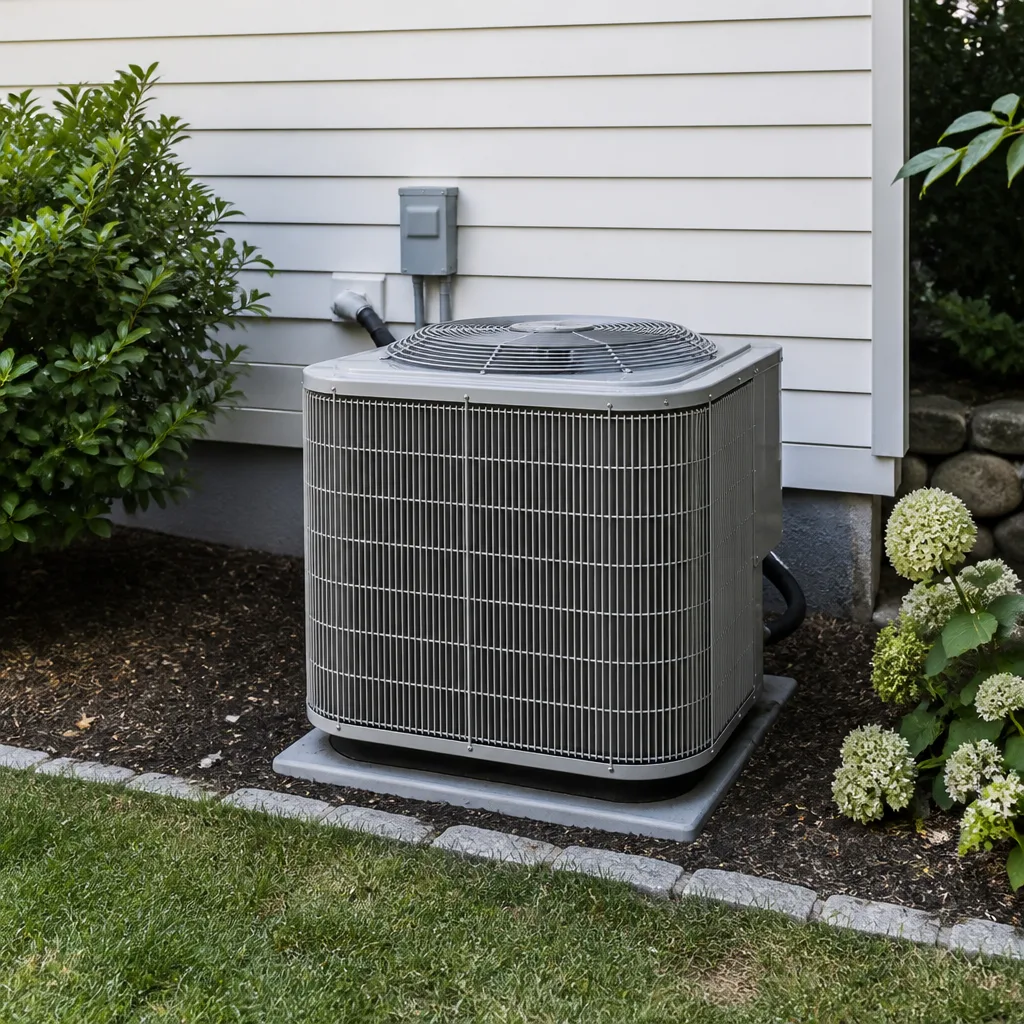 Carrier
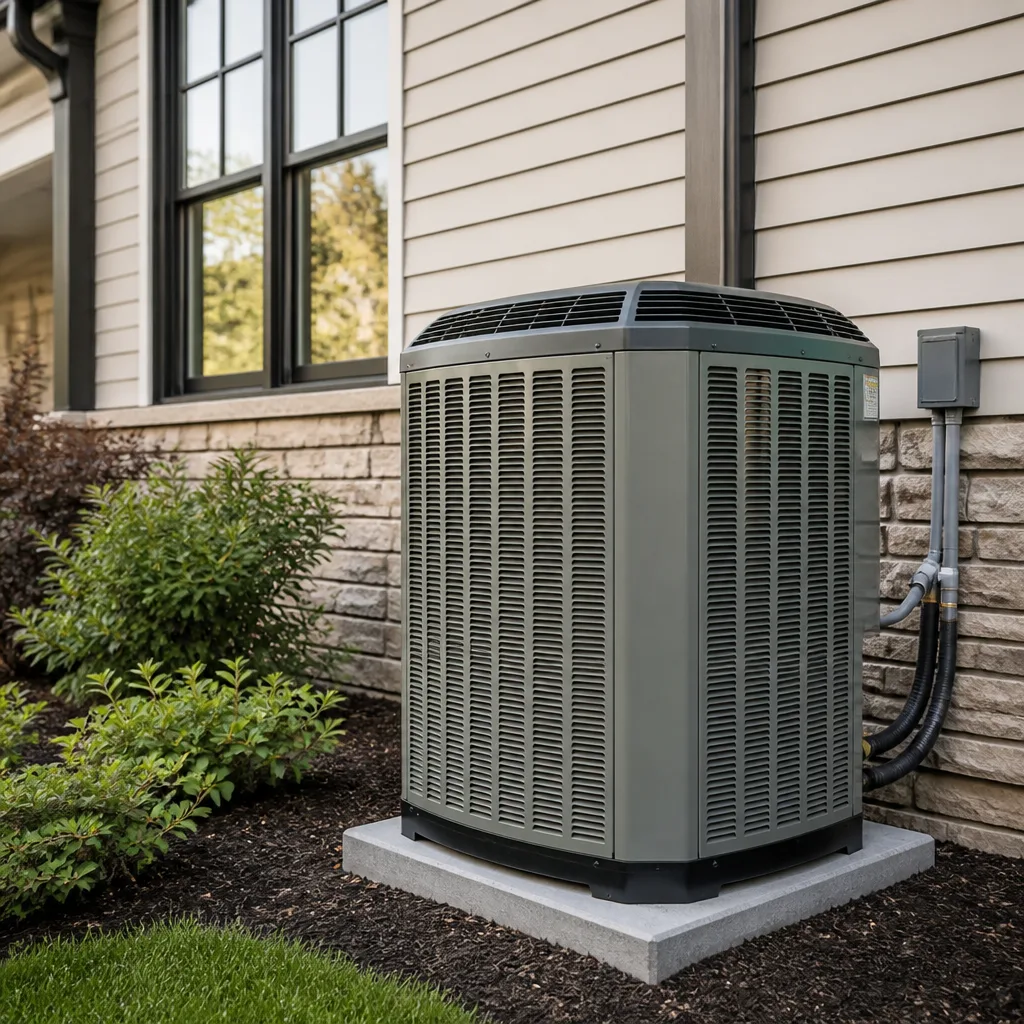 Trane
Trane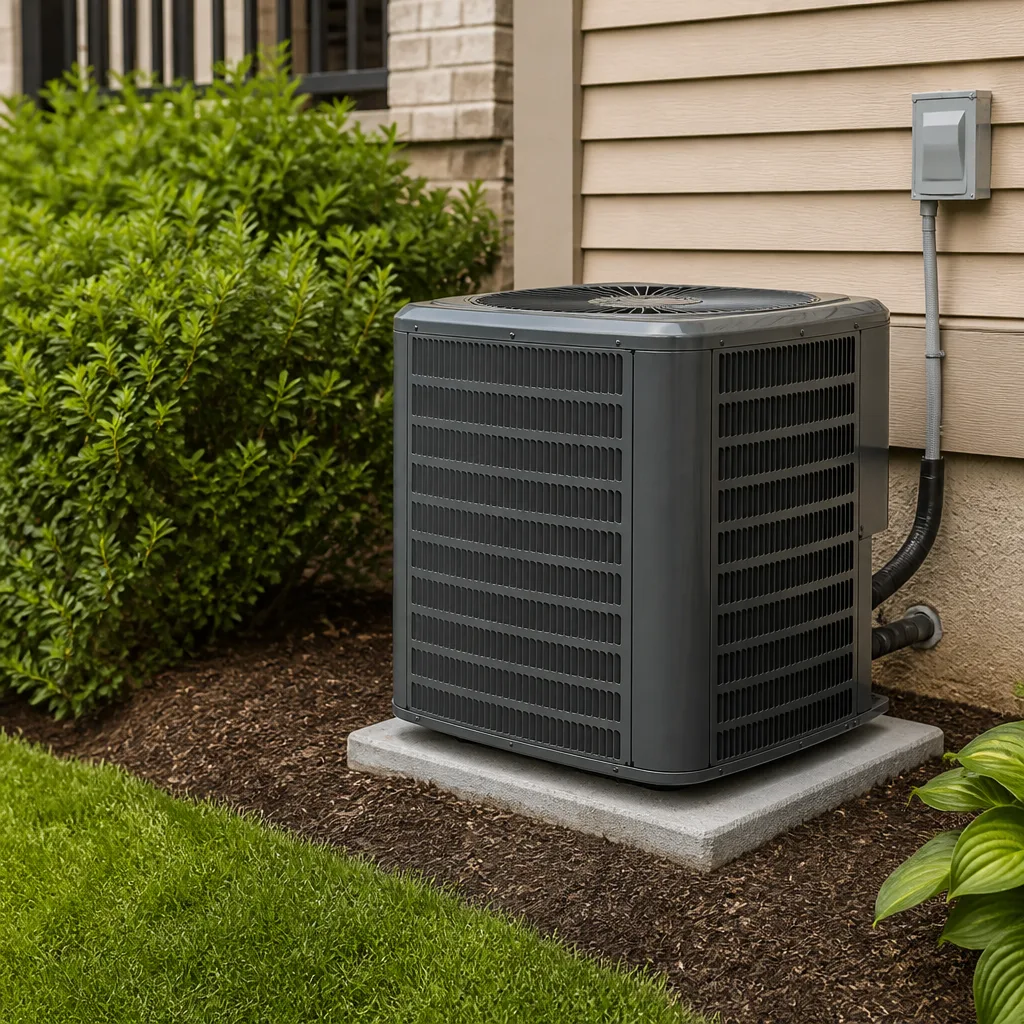 Goodman
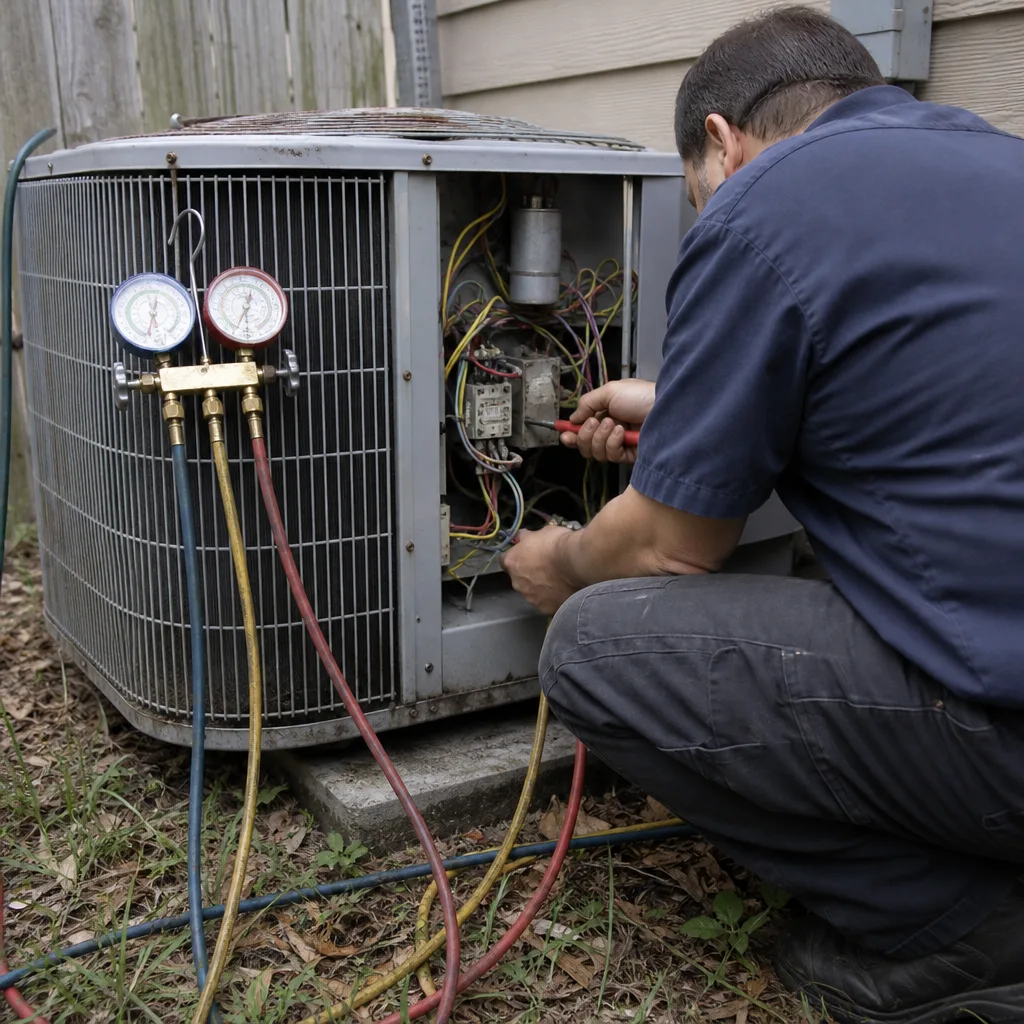
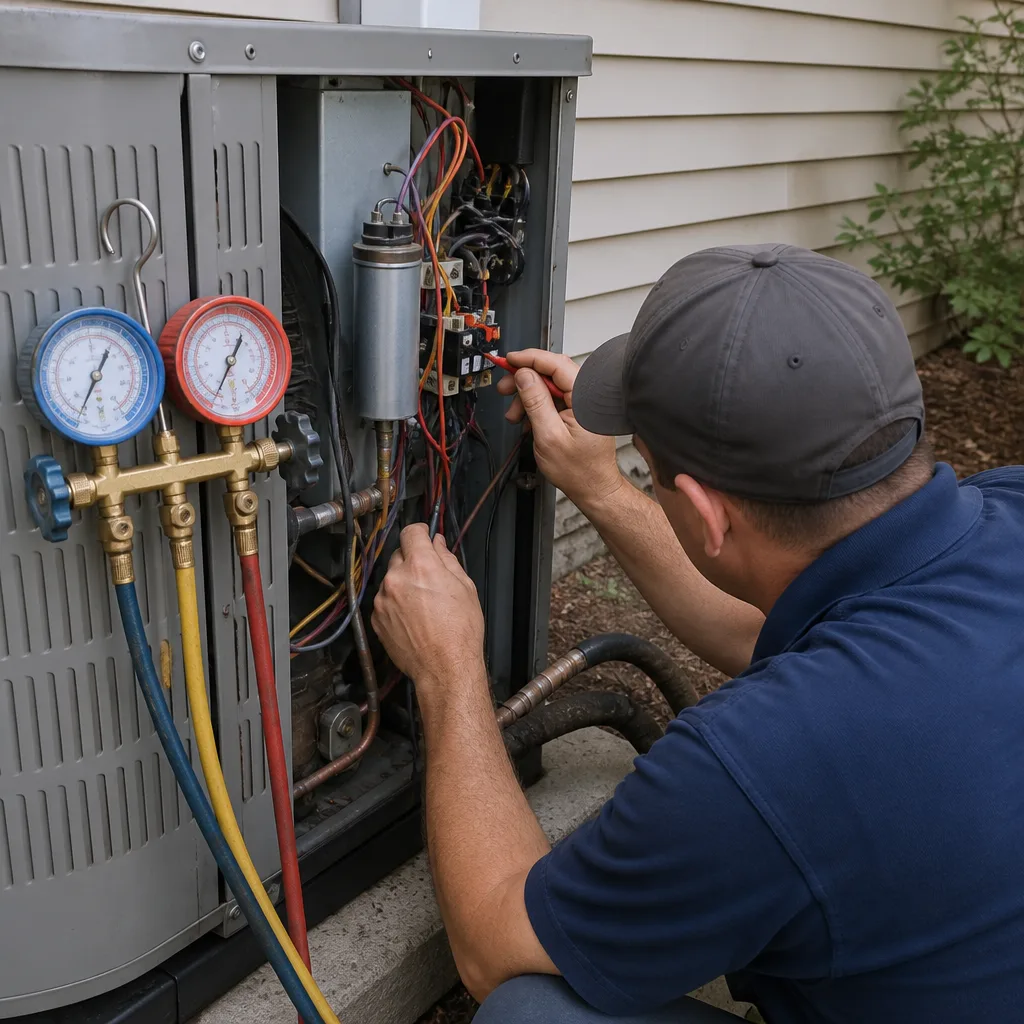
Seasonal tune-up and full diagnostic on your Carrier, Trane, or Goodman system - readings shown to you before any repair is proposed
Diagnosis first, numbers second - you approve the repair price before a single part goes in.
Get your free estimateHVAC Cost Breakdown: The Tampa Homeowner’s Reference for 2026
Tampa homeowners replacing a central AC system in 2026 will see quotes ranging from $5,800 to $14,000 for essentially the same 3-ton unit – not because of quality differences, but because of markup structures, refrigerant choices, and permit inclusion that most contractors never explain. The gap between those numbers is where HVAC companies make their margin, and it is rarely disclosed in plain language. This guide publishes the actual line-item structure of Tampa HVAC pricing so you can evaluate a quote the way a professional would, and you’ll find more guides & resources to help protect your investment. You’ll learn what each line on a replacement quote means, why refrigerant type is now the biggest price variable in Tampa, how financing actually costs you, and what a binding written quote must contain in Florida.
Quick Answer
A full central AC replacement in Tampa in 2026 typically runs $6,500 to $11,500 for a 3-ton system, with equipment accounting for roughly 40 percent of the total, labor and refrigerant making up another 40 percent, and permit, disposal, and supply costs covering the rest. The single biggest variable is refrigerant type: systems using the newer R-454B cost more to install but will have stable repair costs for a decade, while older R-410A units are now seeing rising refrigerant prices as production winds down. Most Tampa repair calls fall between $150 and $500, but any repair involving refrigerant can push past $900 depending on the type and amount needed. Watch for HVAC Warning Signs: A Tampa Homeowner’s Reference Guide to catch problems early.
Styles & brands we work with
Table of Contents
- The Real Line-Item Breakdown of a Tampa AC Replacement
- The Refrigerant Transition: Why R-22 and R-410A Repairs Are Getting Expensive
- Flat-Rate Pricing vs. Time-and-Materials: Which Model Favors You
- What Financing Actually Costs: The True Price of a $9,000 System Over Time
- What a Legally Binding Written Quote Must Contain in Florida
- Repair vs. Replace: The Honest Math for Aging Tampa Units
- Tampa-Specific Cost Factors Most National Guides Miss
- Common Mistakes to Avoid
- When to Call a Professional
- Frequently Asked Questions
The Real Line-Item Breakdown of a Tampa AC Replacement
Every AC replacement quote in Tampa is built from five distinct cost categories, and most contractors present them as a single bottom-line number. That is a deliberate choice. When you see the line items, you can ask sharper questions. Here is what a 3-ton, 16 SEER system actually costs in Tampa in 2026, line by line.
- Equipment cost (contractor wholesale): $2,800 to $4,200. This is what the contractor pays for the condenser, air handler or furnace coil, and matching evaporator coil. Contractors buying from Bryant, Carrier, Trane, or American Standard distribution networks in Tampa typically pay 15 to 25 percent less than retail because of volume agreements. You should never pay “list price” for equipment, but you also cannot buy direct from a distributor without a license.
- Labor for installation: $2,000 to $3,500. A two-person Tampa crew typically spends 6 to 10 hours on a standard changeout. The range reflects complexity: attic access in older South Tampa bungalows, closet air handlers in Carrollwood condos, and second-story condenser pads in Westchase all add labor time. Crews are paid by the hour regardless of what the quote says, and a tight, rushed install is the most common cause of early failures we see.
- Refrigerant and line set: $400 to $900. New systems ship with a nitrogen charge, not refrigerant. The installer must supply the full refrigerant charge. In 2026, R-454B is the standard for new equipment and runs roughly $45 to $70 per pound, with a 3-ton system needing 6 to 8 pounds of charge plus whatever the line set requires. If a Tampa contractor is installing an older-stock R-410A unit, the refrigerant cost can be $60 to $90 per pound because supply is constrained.
- Permit and inspection fee: $120 to $500. The City of Tampa and Hillsborough County require a mechanical permit for any system replacement, and the fee scales with the job value. Pulling the permit also triggers an inspection, which adds a return trip for the contractor. Contractors who skip this line item are not saving you money – they are violating local code, and the risk transfers to you when you try to sell the house.
- Disposal and misc supplies: $200 to $600. This includes removing and properly recycling the old condenser (EPA rules apply to refrigerant recovery), hauling the old air handler, new electrical disconnect, new condensate drain line, new pad, new thermostat wiring, and any duct transitions needed at the plenum.
Add those together and a fair Tampa market price for a basic 3-ton replacement lands between $5,520 and $9,700 before any ductwork modifications, electrical panel upgrades, or indoor air quality add-ons. When you see a $14,000 quote for the “same” system, the difference is almost always fat markup on the equipment line or a high-pressure sales process with a same-day close discount. If you want to understand what Tampa-specific factors move these numbers, the AC Installation in Tampa page covers the install process in more detail.
The Refrigerant Transition: Why R-22 and R-410A Repairs Are Getting Expensive
Refrigerant is the coolant that circulates through your AC system, absorbing heat inside and releasing it outside. For decades, systems used a type called R-22. In 2010, the industry shifted to R-410A. Now, in 2026, the industry is shifting again to R-454B. Each transition means the older refrigerant becomes scarcer and more expensive to produce, and those costs hit Tampa homeowners directly at repair time.
Here is what the transition means in practical dollars:
- R-22 systems (installed before ~2010): R-22 is no longer produced or imported in the US. What remains is reclaimed stock. In Tampa, a pound of R-22 now runs $150 to $250, and a system low on charge may need 3 to 7 pounds. A $900+ refrigerant top-off is a real quote we are seeing in 2026, and it is a temporary fix – the system is still leaking. If your Tampa home still runs R-22, every refrigerant-based repair should trigger a serious replacement conversation.
- R-410A systems (installed ~2010 through ~2025): R-410A is still available but production is being phased down under the EPA’s HFC reduction schedule. Prices in Tampa have risen from roughly $25 per pound in 2020 to $60 to $90 per pound in 2026. Repairs are still viable for now, but the trend line only points one direction.
- R-454B systems (new 2026 installations): R-454B is the current standard for new equipment, with a lower global warming potential and stable pricing between $45 and $70 per pound. New systems using Bryant, Carrier, or Trane equipment with R-454B will have predictable repair costs for the next decade because refrigerant supply is not constrained.
The honest math for a Tampa homeowner with an R-22 system that needs a $1,100 refrigerant recharge is simple: you are paying roughly one-sixth the cost of a new system to buy maybe one more Tampa summer, if the leak is slow. If the leak is in the evaporator coil, that repair alone runs $900 to $1,600 for an obsolete system. Two of those repairs in a season and you have funded a third of a replacement without improving your equipment. For a more detailed look at what repairs cost on modern equipment, see AC Repair in Tampa.
Flat-Rate Pricing vs. Time-and-Materials: Which Model Favors You
Most Tampa HVAC companies use one of two pricing models, and you can tell which one you are dealing with before the technician arrives. The model determines whether you benefit from the technician being fast or slow.
Flat-rate pricing means the company publishes a set price for each repair task – a capacitor replacement is $X, a condenser fan motor is $Y, a refrigerant top-off is $Z. The price does not change based on how long the job takes. If the technician struggles with a rusted panel and the job takes two hours instead of 45 minutes, the price stays the same. Flat-rate favors the homeowner when the job goes slow and favors the company when the job goes fast. It also removes the “watching the clock” anxiety, because you agreed to the number before the work started.
Time-and-materials means you pay for actual labor hours plus the cost of parts, often with a markup. The advantage is transparency: you know exactly what the part cost the company. The disadvantage is that you bear the risk of a slow job, an inexperienced technician, or an install that hits unexpected complications. In Tampa, time-and-materials is more common on commercial jobs and on larger custom installations where the scope is genuinely unknown.
The tell for which model a company is using: ask directly before you book. “Is your repair pricing flat-rate or time-and-materials?” A company using flat-rate will say so immediately and can usually quote a range over the phone. A company that dodges the question – “depends on what we find,” “the technician will determine that” – is almost certainly running a hybrid model where the flat-rate book is aggressive and the happy path remains vague. That is legal in Florida, but it is not in your interest.
What Financing Actually Costs: The True Price of a $9,000 System Over Time
HVAC financing sounds painless: “$97 a month and you get a new system.” The math behind that sentence is worth walking through, because the term length – not the interest rate – drives your total cost. Here is what a $9,000 Tampa AC replacement actually costs across the three most common financing structures in 2026.
- 18-month same-as-cash (0% APR): If you pay the balance in full within 18 months, your total cost is exactly $9,000 at $500 per month. If you miss the payoff deadline, the deferred interest is added retroactively. At a typical card rate of 29.99 percent APR, that is roughly $2,025 in retroactive interest. A properly structured promo with automatic payments is the cheapest way to finance – but missing the deadline by one day is the most expensive mistake you can make.
- 60-month fixed-rate at 9.99% APR: Monthly payment is $191. Total interest paid over 5 years is $2,460. Total cost: $11,460. This is the current “standard” HVAC financing offer in Tampa, and it is a fair middle ground for homeowners who want predictability.
- 84-month fixed-rate at 11.99% APR: Monthly payment is $159. Total interest paid over 7 years is $4,356. Total cost: $13,356. That is a 48 percent premium over paying cash, and the breakeven on the $159 payment only makes sense if the alternative was a home equity line at a higher blended rate or an unrepaired system failing entirely.
Now apply the repair-versus-replace lens. Suppose your aging R-410A unit needs a $700 repair every year for the next five years. That is $3,500 in repairs on a system that still fails in a Tampa heat wave. Financing a replacement at $9,000 over 60 months costs $11,460 total, but you have a warranted system, lower electric bills, and no annual repair roulette. The break-even that most Tampa homeowners should calculate is not “repair vs. replace cost,” it is “cost of repairs plus likely urgency-of-replacement stress vs. monthly payment on a fixed, warrantied system.”
What a Legally Binding Written Quote Must Contain in Florida
Florida law allows oral contracts for some home services, but a verbal AC repair quote is worthless when you need to enforce it. The document that protects you is a signed written quote with dollar figures attached to specific work. Here is what a real, enforceable HVAC quote from any Tampa contractor must include, and the vague language that signals you are about to get a doorstep price surprise. For details on staying compliant, see HVAC Permits, Codes & Inspections in FL: What You Need to Know.
A defensible written quote includes:
- Specific equipment model numbers – not just “Carrier 3-ton.” You want the exact condenser model, coil model, and air handler or furnace model. Without model numbers, a contractor can install a builder-grade unit and charge you mid-tier pricing, and you would never know.
- A line-item price for each component and each labor phase – equipment, refrigerant, permit, disposal, and electrical work each get their own number. A single lump-sum number with no breakdown is legal but useless for comparison shopping.
- The exact permit fee and who pulls the permit – in Hillsborough County, the contractor of record pulls the mechanical permit. If the quote does not mention a permit, ask why.
- Start date and completion date – not “as soon as possible.” A real date anchors the contract.
- Payment schedule – a reasonable structure is a deposit (often 10 to 30 percent) with the balance due at completion, or progress draws on larger jobs. Any quote demanding more than 50 percent up front is a red flag in Florida.
- Warranty terms in writing – both the manufacturer parts warranty and the contractor’s labor warranty. A 10-year parts warranty means nothing if the contractor only covers labor for 1 year.
The vague language to watch for: “subject to change after inspection,” “parts at prevailing market rate,” “labor to be determined,” “additional charges may apply for unforeseen conditions.” A legitimate Tampa contractor will identify what is knowable before the job – the line set length, the electrical panel capacity, the duct condition – and put that in the quote. If a company cannot give you a fixed number before they start work, that is a business model, not an accident. At Halden Heating and Air Tampa, the written price is delivered before any work starts, every single time. That is not a marketing tag – it is the only way a homeowner can compare quotes honestly.
Repair vs. Replace: The Honest Math for Aging Tampa Units
Tampa AC systems run hard. A unit in Tampa typically logs 2,500 to 3,200 cooling hours per year, compared to 1,200 to 1,500 hours in a place like Chicago. That means a 10-year-old Tampa system has the operating equivalent of a 20-year-old northern unit. The national “replace at 15 years” rule of thumb is wrong for our market. Here is the replacement math that actually applies to Tampa.
The $5,000 rule is a useful shortcut: multiply the age of the system by the cost of the needed repair. If the product exceeds $5,000, replace. Example: a 12-year-old system needs a $600 repair. 12 x 600 = $7,200. Replace. A 7-year-old system needs the same $600 repair. 7 x 600 = $4,200. Repair makes sense, assuming the diagnosis is thorough.
Specific replacement triggers we tell Tampa homeowners to weigh seriously:
- Compressor failure on an R-22 or older R-410A system. A compressor replacement runs $1,800 to $3,200 in Tampa, and you are installing a new heart in an old body. The rest of the system still has its original wear, and the refrigerant cost is surging.
- Evaporator coil leak on a system over 10 years old. Coil replacement is $900 to $1,600 labor plus refrigerant, and the repair does not reset the clock on the condenser outside. You are patching, not solving.
- Two or more repairs in a 12-month period costing over $900 total. At that run rate, you are spending more per year than a financed replacement payment, with none of the warranty protection.
- Any repair requiring more than 3 pounds of R-22. At current Tampa pricing, that single repair approaches $800 to $1,100, and the leak remains.
Our Halden Heating and Air Tampa home page walks through how we structure the diagnostic and quote process if you want to see what a transparent repair call looks like from booking to completion. The short version: technician arrives with a live ETA you can track, diagnoses the issue, presents a written price, and the guarantee is in writing before a tool is picked up.
Tampa-Specific Cost Factors Most National Guides Miss
National HVAC cost guides are built for the median American home, which is not a Tampa home. Here are the local factors that move real quotes in Hillsborough County and the neighborhoods we serve.
- Salt air corrosion. Homes in South Tampa, Davis Islands, Westshore, and anywhere within a few miles of the bay see accelerated condenser coil corrosion. A coil that lasts 12 years in Lutz lasts 8 years near Bayshore Boulevard. Budget-conscious replacements near saltwater should use coastal-rated equipment, which adds $300 to $700 per component. Skipping it saves money now and guarantees an early coil replacement.
- Attic installs drive labor up. Many Tampa homes built before 1990 run the air handler in a low-clearance attic with blown-in insulation and truss angles that slow a technician down. Installation labor in these homes can run 20 to 30 percent higher than a garage closet install in a newer Riverview or Wesley Chapel build.
- Electrical panel limitations. Older South Tampa and Seminole Heights homes often have 100-amp panels that cannot support a new high-efficiency heat pump without a panel upgrade. That upgrade runs $1,800 to $3,500 and is separate from the HVAC quote. A reputable contractor checks panel capacity during the quote process; a less careful one discovers it on install day and hands you a change order.
- Hurricane code strapping. Hillsborough County requires hurricane straps or brackets on outdoor condensing units in most residential zones. That is a real $100 to $250 line item if the pad and anchoring need to be replaced, and it is not optional.
- Drain line and humidity management. Tampa’s humidity is brutal on condensate lines. New installations should include a larger-diameter drain, a safety float switch, and possibly a secondary drain pan. These are $150 to $400 in combined cost and they prevent the kind of ceiling damage that a clogged line causes every summer in older homes across Temple Terrace and Town ‘N’ Country.
Common Mistakes to Avoid
- Comparing quotes without comparing line items. A $8,200 quote with a permit and coastal equipment is a better deal than a $7,500 quote with no permit, builder-grade equipment, and a no-name condenser. In Tampa, you are buying the written scope, not the number.
- Paying for a refrigerant top-off without finding the leak. Topping off R-22 or R-410A without locating the leak is paying to buy time and nothing else. The leak will return, and the next top-off will cost more as refrigerant prices climb.
- Financing a system without reading the deferred interest terms. Same-as-cash means same as cash only if the balance is gone by the deadline. One missed payment and the entire accrued interest comes due. Set up autopay to finish 60 days early.
- Accepting a quote that does not list model numbers. A quote that says “3-ton Carrier” without model numbers gives the contractor freedom to install the cheapest unit that fits the description. Demand specifics.
- Assuming a permit is included. In Hillsborough County, permits are required for replacement. If the quote does not list a permit fee, ask whether one is being pulled. If the answer is evasive, walk away.
- Replacing before checking a furnace repair option. Sometimes the problem is not the AC at all but a failing blower motor in the furnace or air handler. A $400 Furnace Repair in Tampa call can save you from a $9,000 replacement.
- Trusting the “free second opinion” that keeps finding new problems. A second-opinion repair call should confirm or dispute the first diagnosis, not open a new sales conversation. If the second opinion comes with a hard-sell replacement pitch and a same-day discount, the “opinion” was a lead-generation tool.
When to Call a Professional
Some Tampa HVAC situations are safe to troubleshoot from the thermostat, the filter, and the breaker panel. Others are not. If your AC is blowing warm air and the condenser outside is frozen solid, turn the system off at the thermostat and the breaker, then call a professional – running it while frozen will destroy the compressor. If you hear a grinding, shrieking, or banging sound from the outdoor unit, that is a mechanical failure in progress and every additional minute of runtime costs you money. If you smell burning or see refrigerant oil pooling under the unit, shut it down immediately. And if your system is over 10 years old and the repair quote exceeds $800, call for a second opinion before you commit – the math on replacement may already favor you. Halden Heating and Air Tampa offers free estimates in Tampa – call (850) 608-1463.
Frequently Asked Questions
A central AC replacement in Tampa typically costs between $6,500 and $11,500 for a standard 3-ton system, with the final price depending on refrigerant type, equipment tier, permit fees, and whether coastal-rated components are needed. Entry-level systems can land near $5,800, while high-efficiency systems with variable-speed air handlers and full electrical upgrades can reach $14,000. Call (850) 608-1463 for an exact quote – estimates are free.
Refrigerant prices in Tampa are rising because R-22 is no longer produced domestically and R-410A is in a phasedown, making both scarcer every year. A refrigerant top-off on an older system can now run $900 or more when the unit is low and the leak is not repaired. If you are being quoted over $800 for refrigerant, ask for the leak location and the replacement math before you agree.
The quick rule: multiply the system’s age by the repair cost. If the result is over $5,000, replacement usually makes better financial sense. A 12-year-old Tampa unit needing a $600 repair scores $7,200 and should be replaced; a 6-year-old unit needing the same repair scores $3,600, so repair is the smarter call. Tampa systems age faster than national averages because they run nearly twice as many cooling hours per year.
No. Halden Heating and Air Tampa provides free estimates on AC replacement and installation work. Every quote is a written, line-item document with equipment model numbers and a fixed price before any work begins. Call (850) 608-1463 to schedule your free estimate.
R-410A is the older refrigerant that powered most systems installed between 2010 and 2025, and it is being phased down under EPA rules. R-454B is the newer refrigerant used in 2026 system installations, with a lower environmental impact and stable pricing because it is in full production. New equipment using R-454B will have more predictable long-term repair costs than R-410A equipment.
Yes. Hillsborough County and the City of Tampa require a mechanical permit for AC system replacements, and the permit fee is typically $120 to $500 depending on the job scope. A legitimate contractor pulls the permit, schedules the inspection, and includes the fee as a line item in your written quote. A contractor who never mentions permits is cutting a corner that can surface when you sell the home.
The Bottom Line
HVAC pricing in Tampa in 2026 is not random – it follows a structure that most contractors do not want you to see. Once you understand the five line items of a replacement, the refrigerant pricing domino effect, the financing math, and the difference between a real written quote and a placeholder, you can evaluate any Tampa HVAC proposal on its actual merits. The homeowners who save real money are not the ones who chase the lowest number; they are the ones who demand a bound, itemized price and understand what they are paying for. If you want a written price from a Tampa company that puts the numbers on paper before work starts, Halden Heating and Air Tampa is built for exactly that – call (850) 608-1463.
Written by Andre Fuller, Owner at Halden Heating and Air Tampa, serving Tampa since 2004.
See the difference
 Before
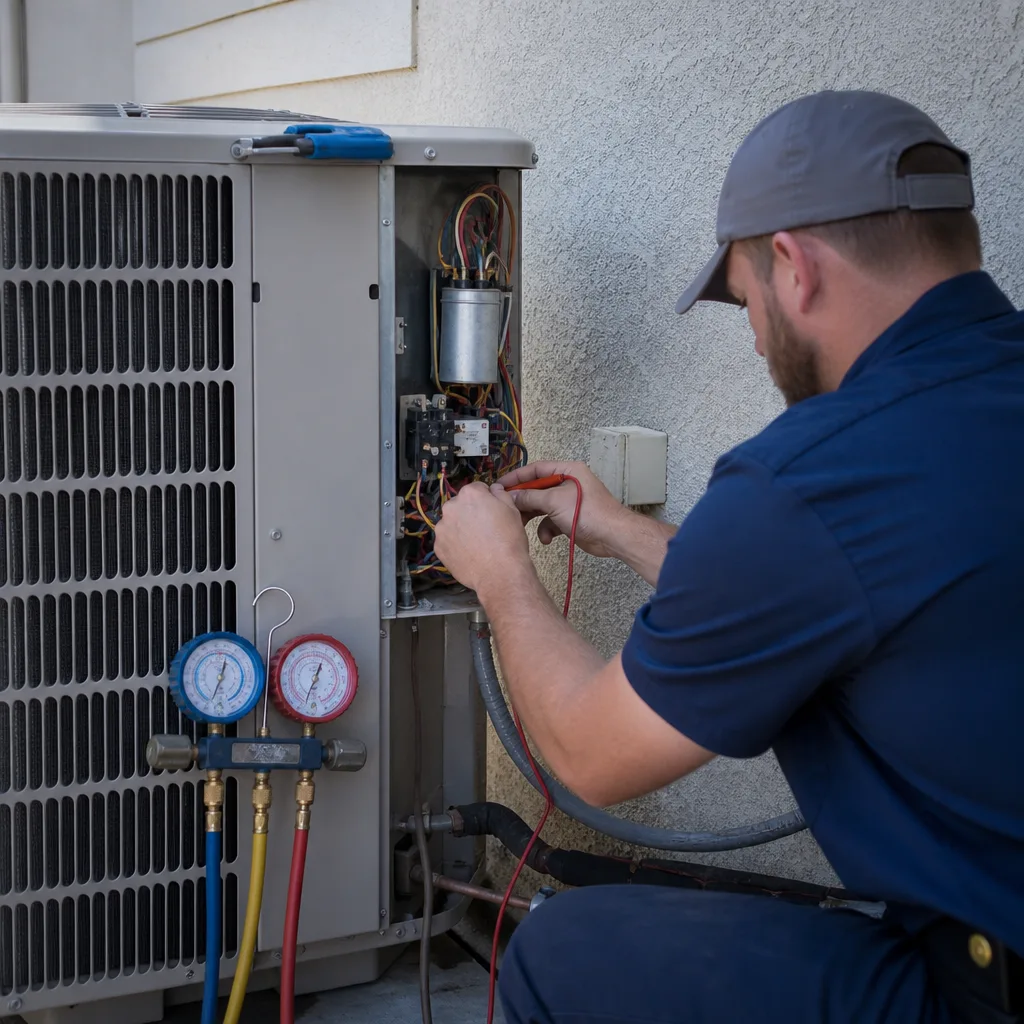 After
After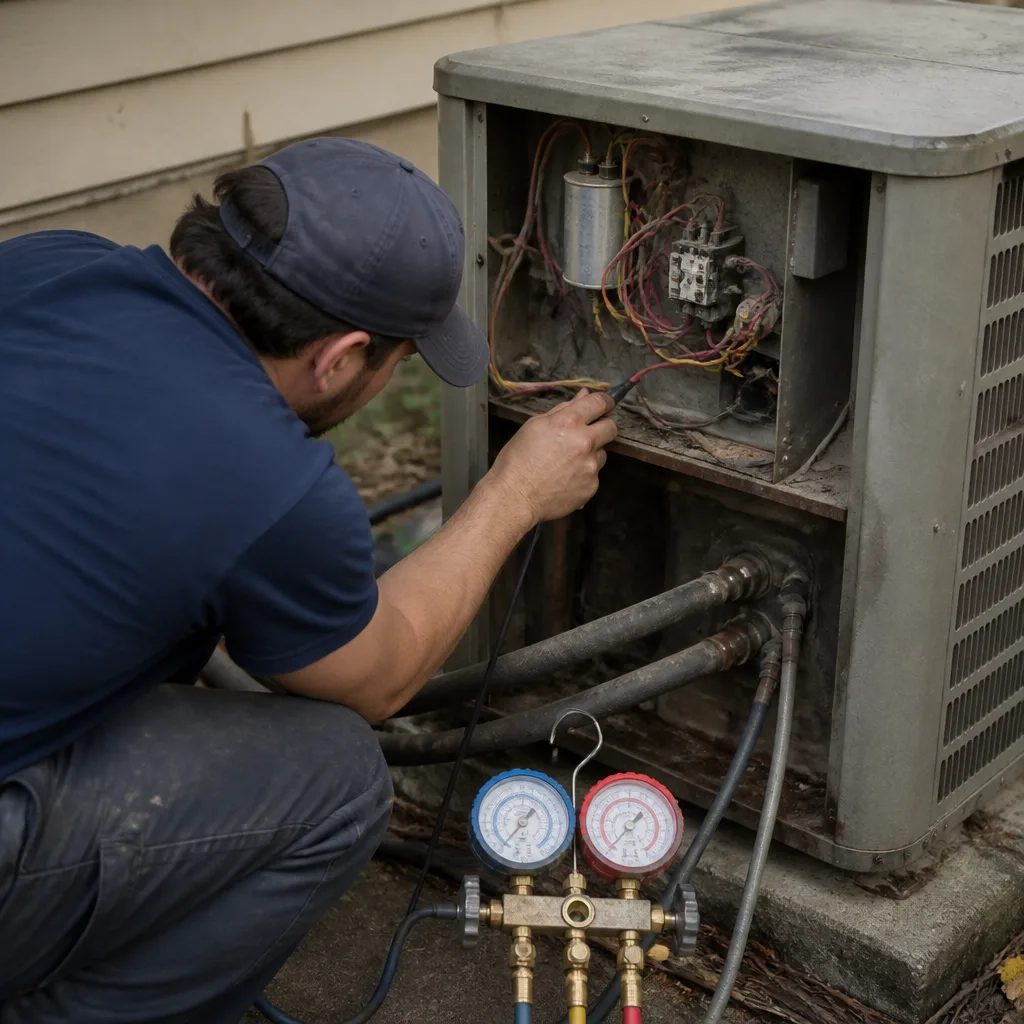 Before
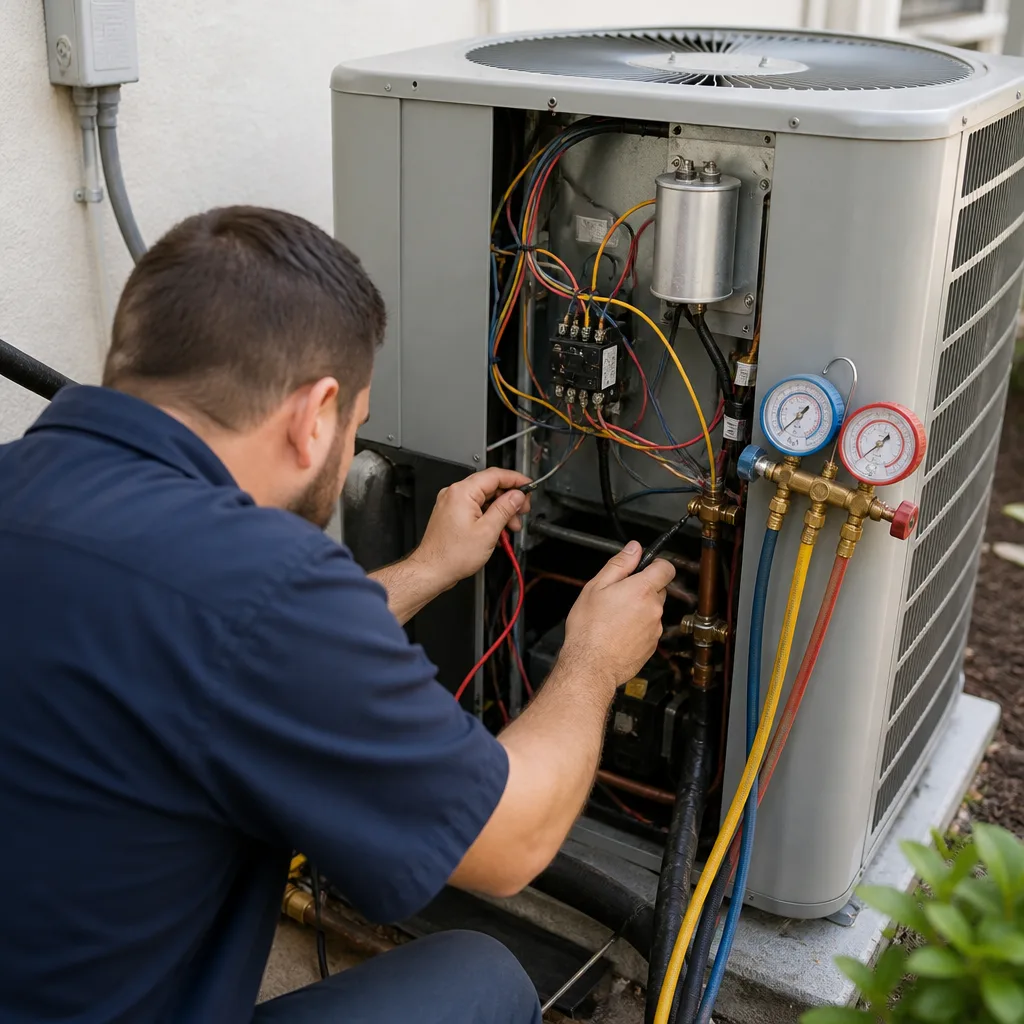 After
After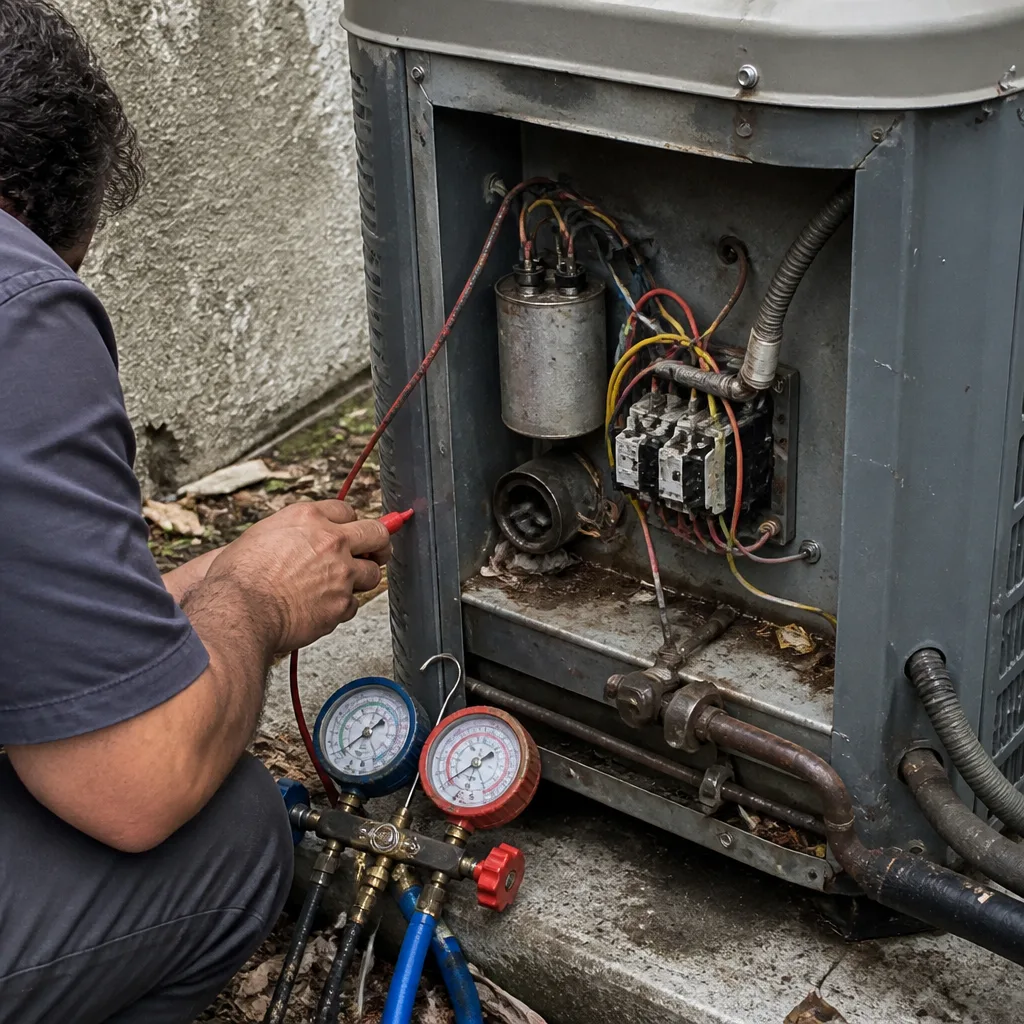 Before
 After
After