
Last updated October 16, 2026
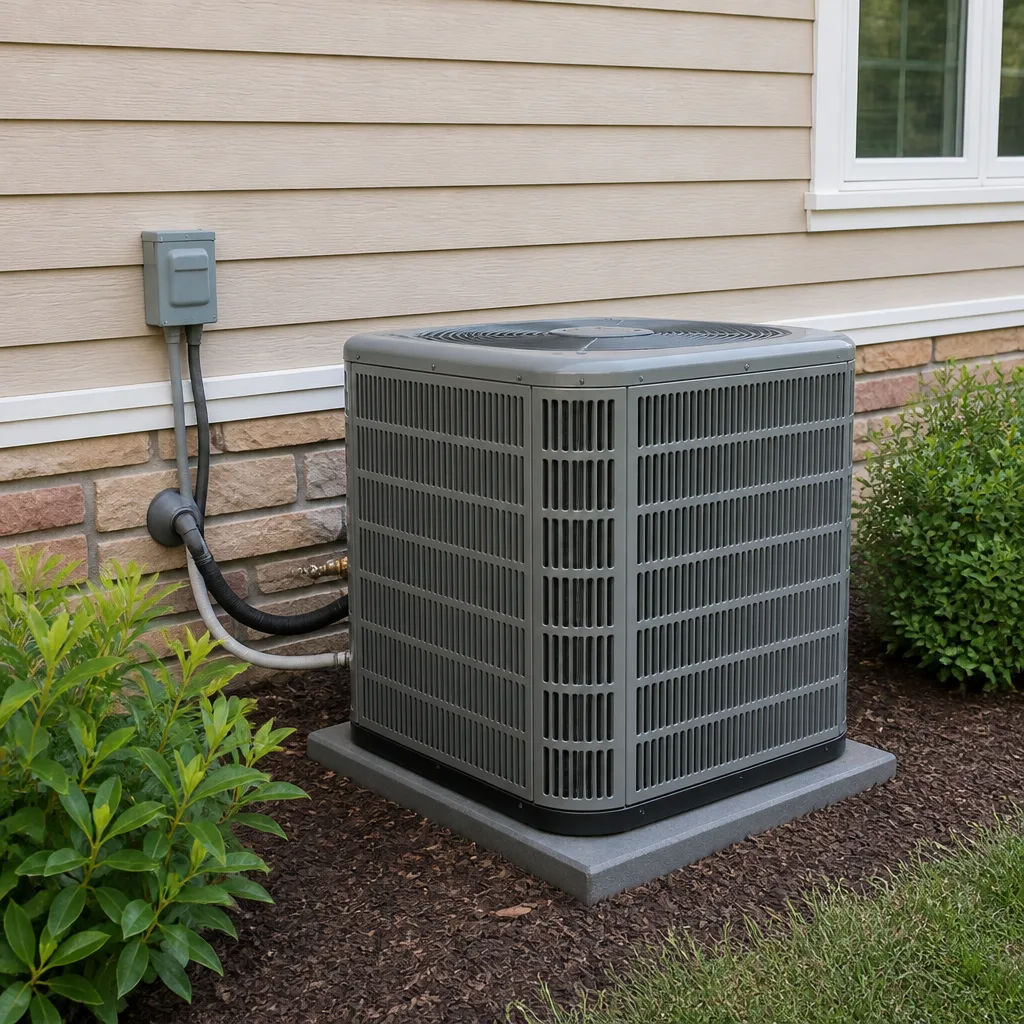 AC repair
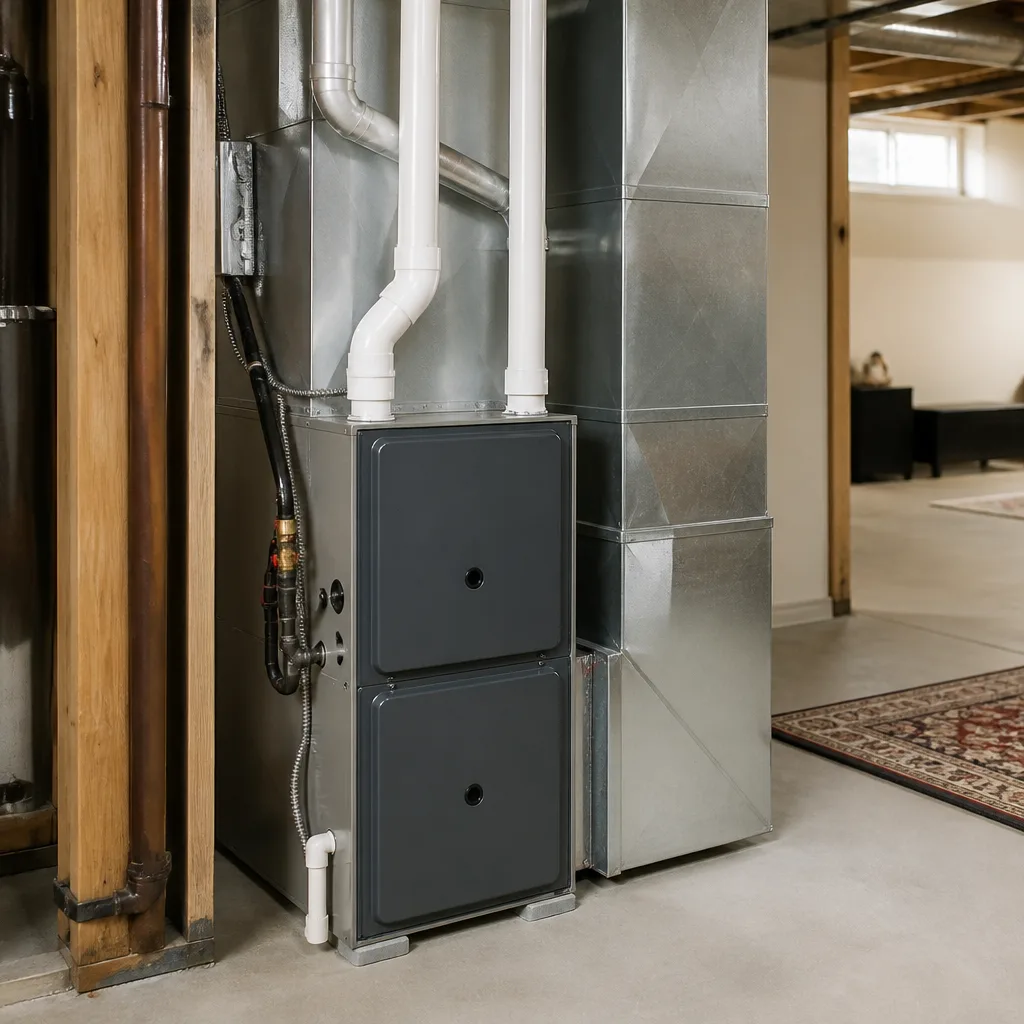 Furnace & heating
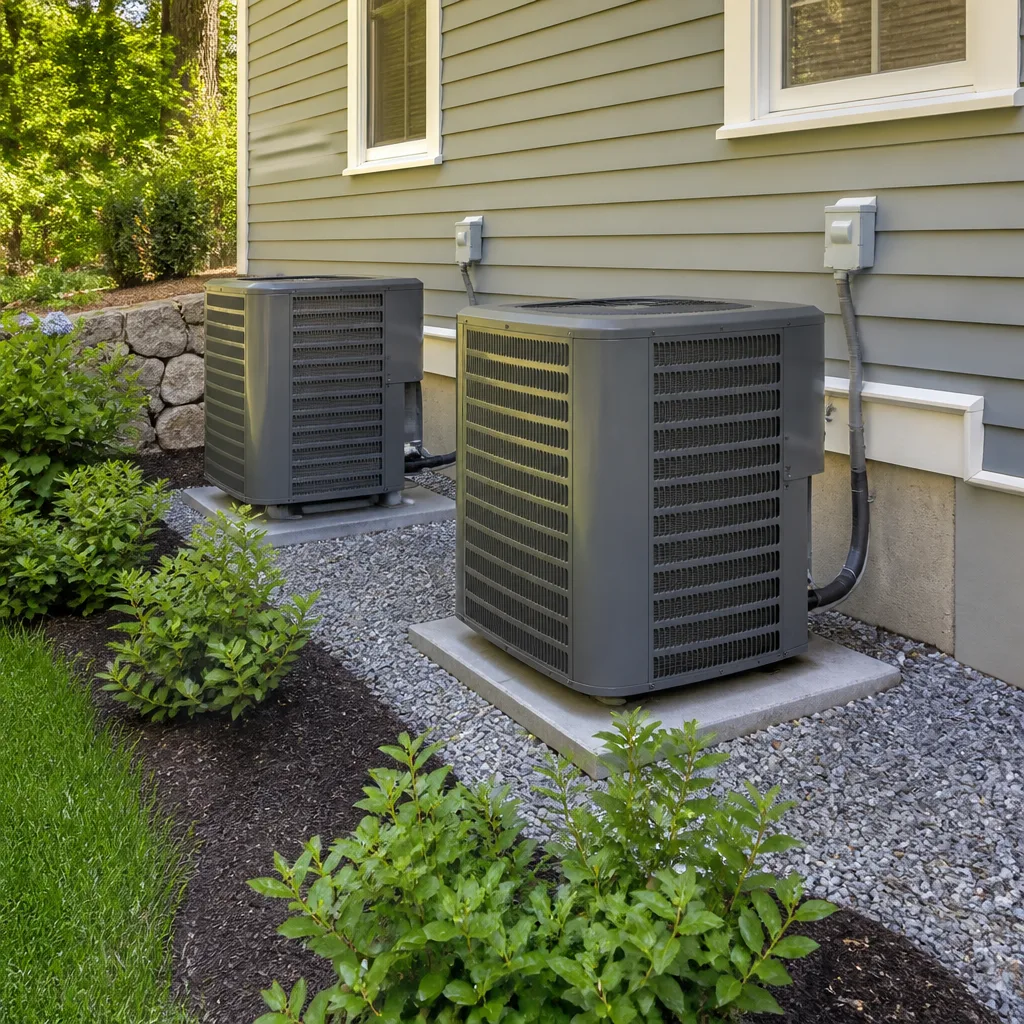 Heat pumps
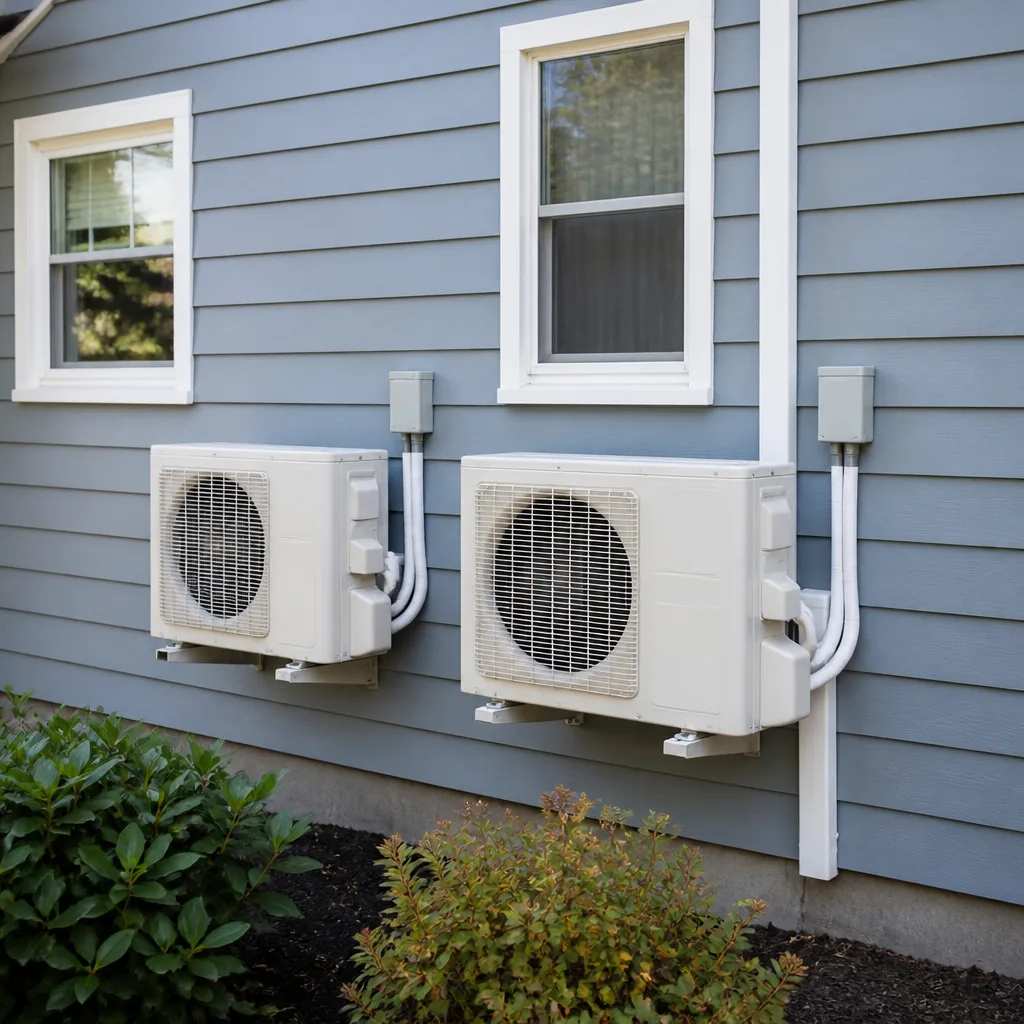 Ductless mini splits
 Carrier
 Trane
Trane Goodman
Seasonal tune-up and full diagnostic on your Carrier, Trane, or Goodman system - readings shown to you before any repair is proposed
Diagnosis first, numbers second - you approve the repair price before a single part goes in.
Get your free estimateAC Repair Maintenance Checklist for Tampa Homeowners
Here’s a number that surprises most Tampa homeowners: the most common cause of a dead AC in August isn’t a failed compressor or old age. It’s a clogged condensate drain line. A $4 flush tablet dropped into the drain pan every 90 days prevents the majority of no-cool calls we run across South Tampa, Carrollwood, and Westchase during peak season. Most maintenance visits skip this step unless the homeowner specifically asks for it. This guide is built backwards from what actually fails in Tampa’s heat and humidity, so you’ll know exactly what to verify was done, not just that “maintenance was performed”-and for a deeper dive, see The Complete Guide to HVAC in Tampa. We’ll show you the monthly homeowner checklist, the technician checklist you should demand, and how to spot a superficial visit in under five minutes.
Styles & brands we work with
Quick Answer
An effective AC maintenance routine for a Tampa home combines monthly homeowner checks (drain line flush, filter inspection, airflow confirmation) with a twice-yearly professional service that includes capacitor testing, contactor inspection, refrigerant pressure verification, and coil cleaning. In Tampa’s humidity, the condensate drain line needs a vinegar flush every 30 to 90 days, and the filter typically needs replacement every 30 to 60 days during peak cooling season. A complete professional maintenance visit should take 45 to 90 minutes and produce a written checklist of readings and photos.
Table of Contents
- The Monthly Homeowner Checklist
- What a Real Technician Visit Must Include
- The Condensate Drain Line: Tampa’s Biggest Failure Point
- Capacitors and Contactors in Plain English
- How to Spot a Superficial Maintenance Visit
- Using Before-and-After Photos to Hold Any Technician Accountable
- A Realistic Maintenance Schedule for Tampa’s Climate
- Common Mistakes to Avoid
- When to Call a Professional
- Frequently Asked Questions
- The Bottom Line
The Monthly Homeowner Checklist
These are the five things you can do yourself in about 15 minutes a month. None of them require opening the electrical panel or touching refrigerant lines, and none of them will void a manufacturer warranty. What they will do is catch the failure patterns we see in Tampa homes every single week before they become a $400 emergency call.
1. Pour one cup of white vinegar down the condensate drain line. Locate the PVC pipe near your indoor air handler, usually a vertical pipe with a cap or an open T-fitting. Pour the vinegar slowly, let it sit for 30 minutes, then flush with two cups of warm water. This dissolves the algae and sludge that thrives in Tampa’s warm, humid drain environment. We’ve pulled enough gelatinous clogs out of drain lines in Seminole Heights and Brandon to fill a bathtub. This $1 monthly step prevents most of them.
2. Inspect the air filter under direct light. Hold the filter up to a light source. If you can’t see the light through it clearly, it’s time to replace it. In Tampa, where systems run nearly year-round, a standard 1-inch fiberglass filter lasts 30 to 45 days during summer. A 4-inch media filter lasts 3 to 6 months. Write the install date on the filter frame with a permanent marker so you’re not guessing.
3. Confirm the outdoor unit has at least 18 inches of clearance. Check around the condenser for grass clippings, leaves, mulch, and the ever-present Florida lovebug buildup. Trim anything growing within 18 inches. Use a garden hose with a spray nozzle on a gentle setting to rinse the coil fins from the outside in, top to bottom. Do this in the morning before the unit cycles on for the day.
4. Verify the thermostat reading matches room temperature. A thermostat drift of 3 degrees or more means the sensor is reading wrong, which causes short-cycling (the system turning on and off too frequently) and wasted energy. If you have a smart thermostat, check the app for runtime reports and humidity readings. Tampa indoor humidity should sit between 45% and 55% in summer. If it’s running at 65%, your system is oversized or not draining properly.
5. Look for water around the air handler or ceiling stains below it. Any moisture, puddling, or discoloration around the indoor unit signals a drain issue or a frozen coil. In Tampa’s climate, condensation is normal. Pooled water is not. If you see a wet spot on the ceiling under an attic air handler, shut the system off and call a professional for AC Repair services same day. That’s not a maintenance item, that’s a repair.
What a Real Technician Visit Must Include
When you book a maintenance visit in Tampa, you’re paying for a specific set of measurements and adjustments, not just a glance and a thumbs-up. A proper visit on a system with no existing problems takes 45 to 90 minutes. Here’s what a thorough technician does at every visit, and why each item matters in Tampa specifically.
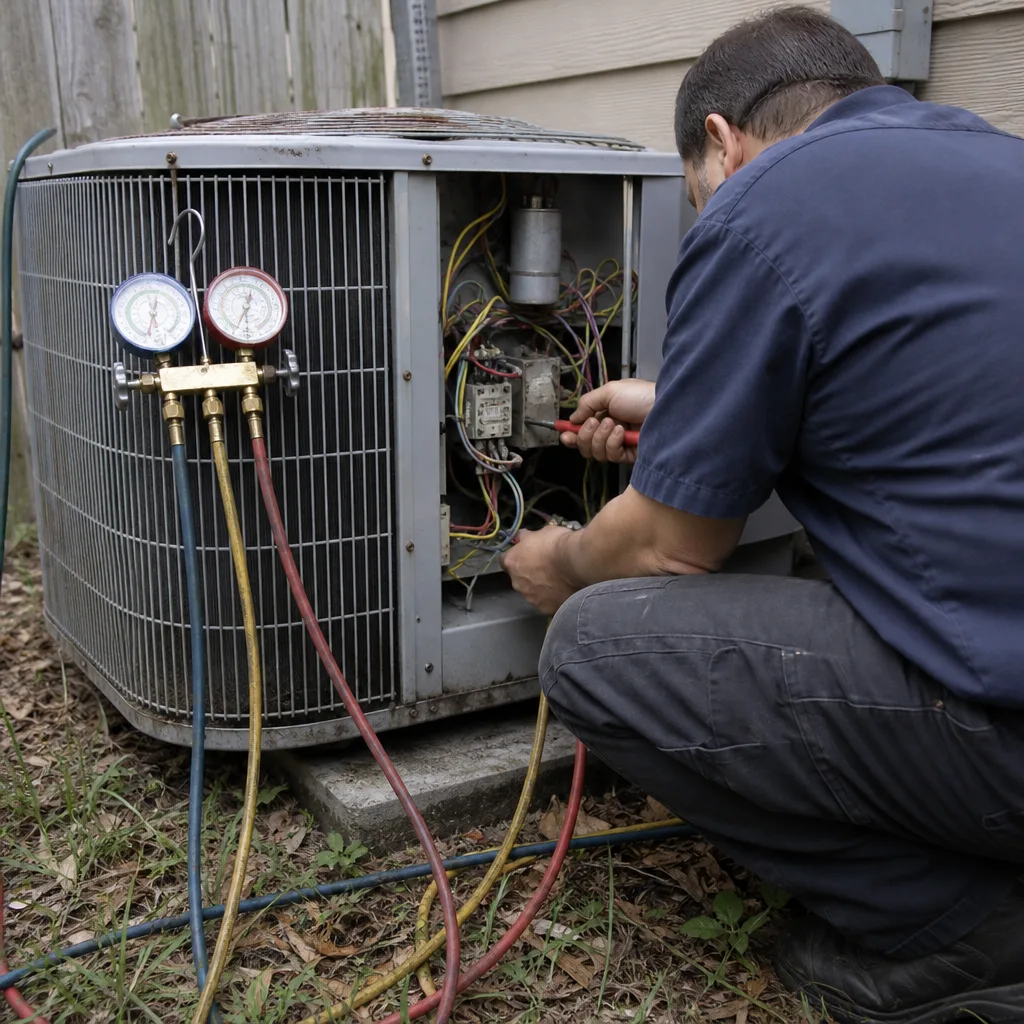
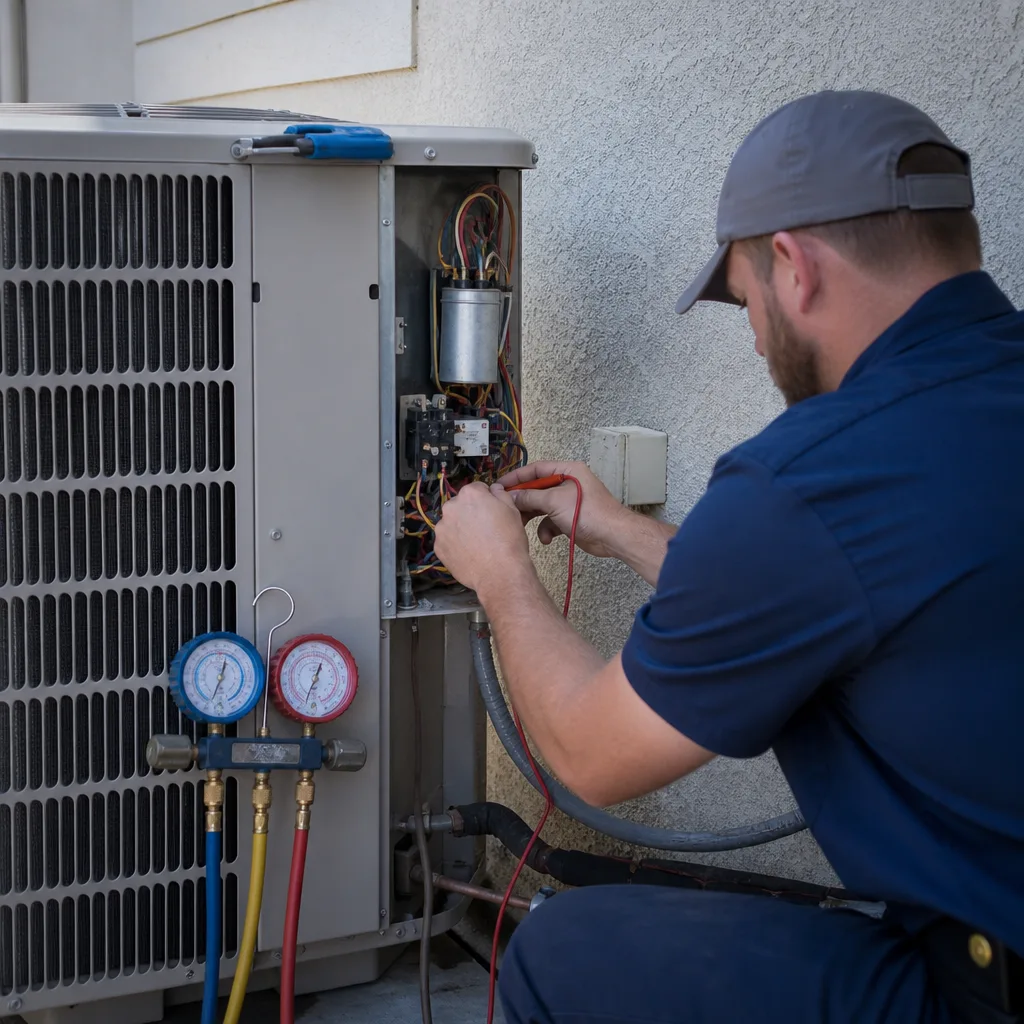
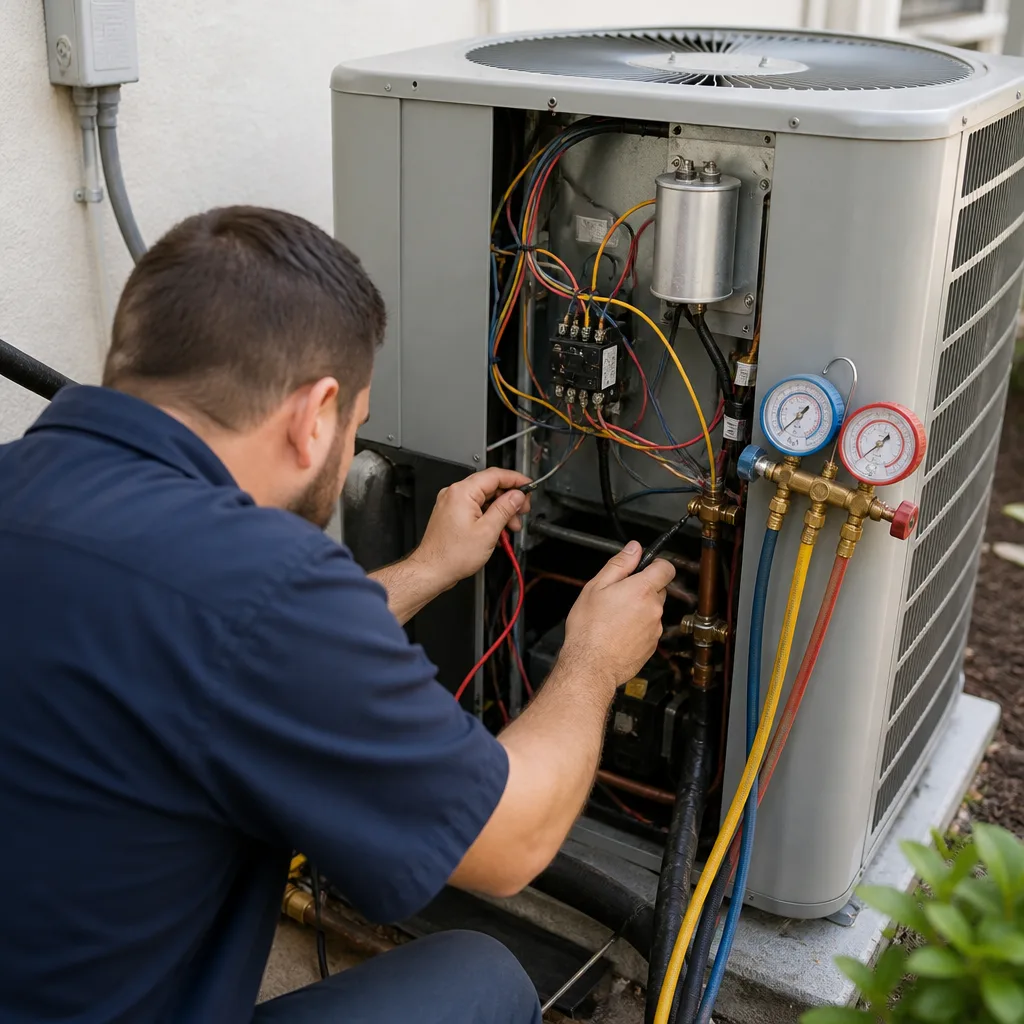
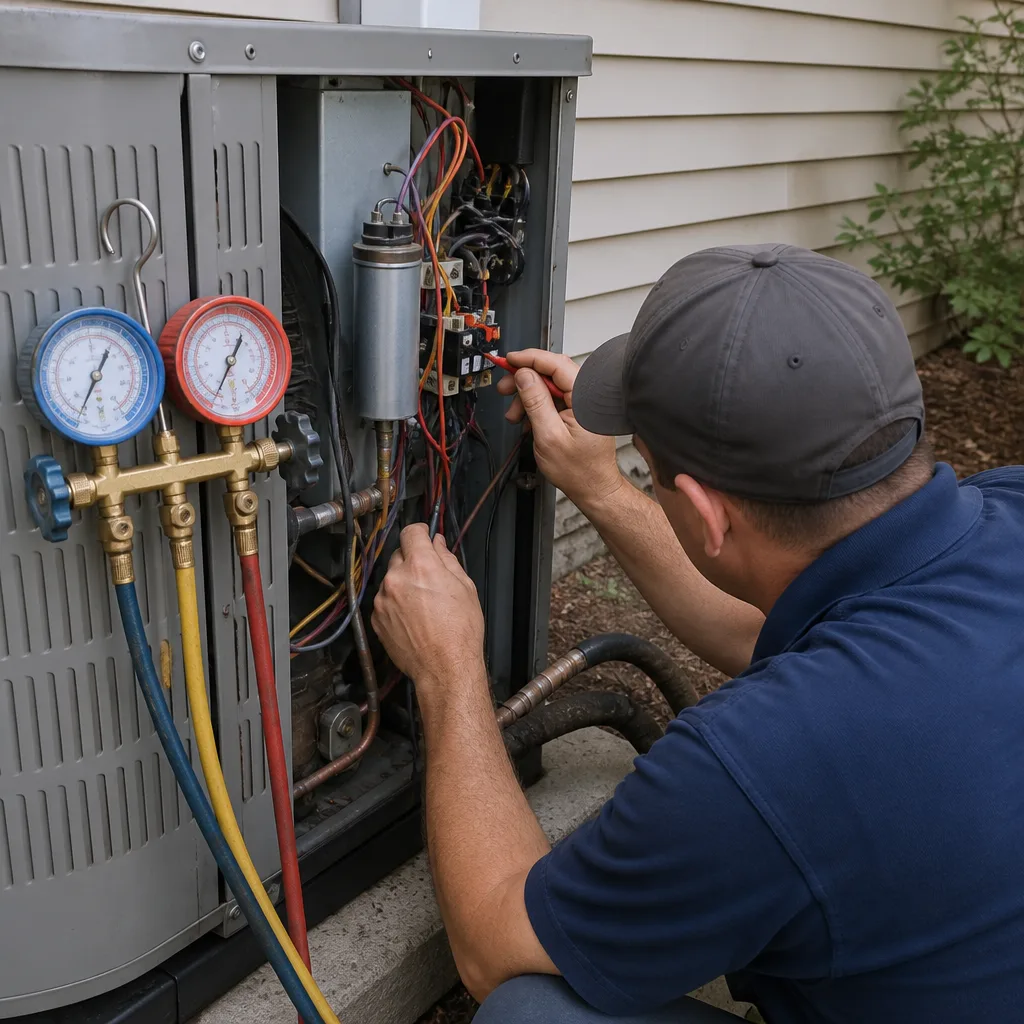
Capacitor testing under load. The capacitor is the small cylinder that gives the compressor and fan motors the kick they need to start. Tampa’s frequent voltage sags during afternoon thunderstorms stress capacitors hard. A technician should test the capacitor with a multimeter and compare the microfarad (µF) reading to the rating printed on the capacitor’s label. If it’s 10% below rated, it’s borderline. If it’s 15% below, it should be replaced before it fails. At Halden Heating and Air Tampa, we show you the actual reading compared to the spec, not just “it tested fine.”
Contactor inspection for pitting and corrosion. The contactor is the electrical switch that turns the outdoor unit on and off. High current arcs across its contact points over time, causing pitting. In Tampa’s salty, humid air, contactors corrode faster than the national average. A technician should inspect the contactor points visually and test for voltage drop across the contacts. A pitted contactor is a cheap part to replace proactively and a major culprit in August no-cool calls.
Refrigerant pressure and superheat/subcooling measurements. Tampa systems lose refrigerant slowly over time, often through microscopic leaks at brazed joints or Schrader valve cores. UV exposure and heat accelerate seal degradation. A technician should attach manifold gauges and verify pressures and temperatures match the manufacturer’s spec. A system low by even 10% on refrigerant runs longer, cools less, and accelerates compressor wear. This is not a “top off and go” task. If refrigerant is low, there’s a leak, and the leak needs to be found.
Condensate drain line full inspection and flush. Not just “checked.” The technician should open the drain line, inspect the internal diameter for sludge buildup, flush it with a wet-vac or compressed air if needed, and verify positive drainage by pouring a measured amount of water through and confirming it exits the other end. In Tampa’s wet season, this one step prevents the most catastrophic failure pattern we see: a drain backup that trips a float switch repeatedly, or worse, a pan leak that damages ceilings and drywall in homes across Hyde Park and New Tampa.
Coil cleaning with appropriate methods. The evaporator coil (inside) and condenser coil (outside) need cleaning, but not with a pressure washer. A technician should use a no-rinse foam evaporator coil cleaner for the indoor coil and a fin-comb plus low-pressure water for the outdoor coil. Hosing down a condenser is fine for you to do monthly. The deep clean, with access panels removed and proper chemicals, is a technician task during the service visit.
Thermostat calibration and wire inspection. Loose low-voltage wires at the thermostat or air handler cause intermittent operation, which many homeowners in Tampa misread as a major system problem. A technician should verify the thermostat’s temperature reading against a calibrated thermometer, confirm cooling and fan cycles operate correctly, and check the wiring terminals for corrosion.
The Condensate Drain Line: Tampa’s Biggest Failure Point
We started this guide with the drain line because it’s the single most preventable source of Tampa AC failures. A working air conditioner in Florida pulls 5 to 20 gallons of moisture from the air per day. All of that water needs to go somewhere, and it travels through a PVC pipe that runs from the air handler to either a drain outside, a utility sink, or a plumbing stack. The inside of that pipe stays damp, dark, and warm. That’s exactly what algae and bacteria need to grow, and in Tampa’s eight-month cooling season, they grow fast.
What a Working Drain Line Looks Like
A healthy drain line should flow freely with no standing water at the cleanout. If you have a clear section of pipe or an inspection port near the air handler, you should see water moving through within a few seconds of the system shutting off. The pipe exterior should be dry. The emergency drain pan under the air handler should be completely dry. If the float switch in the drain line or pan trips, the system will shut off to prevent a spill, and you’ll know because the air handler runs but the outdoor unit won’t cycle.
What a Failing Drain Line Looks Like
The early warning signs, in order: a faint musty smell from the supply vents, especially in the first minute after the blower starts; water stains on the air handler cabinet or the drywall under it; gurgling sounds from inside the air handler when cooling shuts off; a float switch that trips and resets repeatedly; and finally, actual water pooling or a wet ceiling. By the time you see water damage in a Seminole Heights bungalow or a Riverview two-story, you’re dealing with a repair that costs several times what maintenance would have.
How to Self-Flush With Vinegar
The monthly vinegar flush we described in the homeowners section works because vinegar’s mild acidity dissolves the early-stage bio-slime before it hardens into a full clog. For a deeper DIY clean, here’s the sequence:
- Turn off the AC at the thermostat and the breaker.
- Find the drain line’s T-fitting or cleanout port near the indoor air handler. Remove the cap.
- Pour 2 cups of white vinegar into the opening. Let it sit for at least 30 minutes.
- Flush with a full gallon of warm water, poured slowly.
- Watch the outlet end of the pipe (usually outside near the condenser or into a sink) for clear water flow.
- Replace the cap and restore power.
If the water backs up instead of flowing through, you have a full clog. Do not pour chemicals, bleach, or a drain snake into the line. Bleach hardens bio-slime rather than dissolving it, and a wire snake can puncture the thin PVC at an elbow you can’t see. At that point, a technician with a wet-vac and access ports needs to clear it. It’s a fast fix during a maintenance visit, but a worse problem when it’s discovered at midnight in July.
Capacitors and Contactors in Plain English
Two small electrical components are responsible for the majority of Tampa no-cool calls we field in July and August, and neither one is visible without opening the outdoor unit’s electrical panel. Understanding them helps you know what to ask about during maintenance and why a technician’s report should include specific numbers.
The Capacitor: The Starting Kick
The capacitor is a small metal cylinder about the size of a toilet paper roll, mounted inside the outdoor unit’s electrical compartment. It stores and releases a burst of electricity that kicks the compressor and condenser fan motor into motion. Think of it like the starter motor on a car engine. Without it, the motor hums but can’t turn over. Tampa’s afternoon thunderstorm voltage sags, combined with high heat soak, degrade capacitor internals faster than the manufacturer’s rating envelope assumes. We see capacitors fail in 5 to 7 years on Tampa systems that would last 8 to 10 years in a cooler, more electrically stable climate.
A failing capacitor shows these signs before total failure: the outdoor unit hums but the fan doesn’t spin; the fan spins slowly or backward; the system trips a breaker on start; cooling is weak because the compressor is running but the condenser fan is not. During a maintenance visit, a technician tests the capacitor with a meter and reads the microfarad value. A healthy capacitor reads within 6% of its label. A reading 10% low is a recommendation to replace. At 15% low, we’d put one on before it leaves you stranded.
The Contactor: The On/Off Switch
The contactor is the relay that connects 240 volts to the outdoor unit when the thermostat calls for cooling. Every time the system starts, the contactor’s internal contact points slam together, creating a small arc. Over thousands of cycles, that arcing pits and carbonizes the contact surfaces. Add Tampa’s humid, salt-influenced air, and you get corrosion on top of the pitting. A degraded contactor can’t pass full current, which creates resistance and heat. Eventually the contacts weld themselves together (the unit runs even when the thermostat says off) or burn apart (no cooling at all). Both are common patterns in Tampa homes built before 2010 where contactors have never been replaced.
During maintenance, a technician should remove the contactor cover or visually inspect the contact points for pitting, discoloration, or melted insulation at the terminals. They should also check the coil voltage that pulls the contacts closed. Contactor replacement is a $120 to $200 part-and-labor job for most residential systems. Compressor replacement from a contactor-induced failure, by contrast, usually means $1,800 to $4,500 installed. This is the math of proactive maintenance in one sentence.
How to Spot a Superficial Maintenance Visit
Not all maintenance visits are equal, and Tampa homeowners should know the difference. A maintenance visit that takes under 20 minutes for a system with no obvious problems is almost certainly incomplete for a Tampa home in peak season. Here’s what a rushed visit looks like and what gets skipped.
The “filter swap and walk” special. The technician changes the filter, rinses the outdoor coil with a hose, tells you everything looks good, and is gone in 15 minutes. No electrical measurements were taken, no drain line was opened, no refrigerant pressures were checked. You just paid for a filter swap and a car wash. A real maintenance visit on a healthy system takes at least 45 minutes in Tampa during summer, because the measurements take time and the drain line flush cannot be rushed.
No numbers in the report. A legitimate report includes actual readings: capacitor microfarad values, refrigerant pressures (high side and low side), superheat and subcooling temperatures, temperature drop across the coil (typically 15 to 20 degrees), and amp draws on the compressor and fan motor. A report that says “cooling OK” or “pressures fine” without numbers is not a report. It’s an opinion. Ask for the numbers. Any technician who did the work has them.
The drain line was never touched. In Tampa’s humidity, this is the tell. If the technician didn’t open the drain line cleanout and physically verify drainage, they skipped the single most important maintenance task for this climate. Ask directly: “Did you open the drain line and flush it?” If the answer is vague, the answer is no.
No before-and-after photos. Modern HVAC maintenance should include photo documentation. A technician who takes photos of the coil before cleaning and after cleaning, of the drain line interior, of the capacitor reading on the meter, and of the contactor condition is showing you the work. A technician who takes no photos is asking you to take their word for it. Under The Relay Standard, every job at Halden Heating and Air Tampa includes before-and-after photos so you can see exactly what was done without standing over someone’s shoulder. If another company refuses, that’s a data point.
Using Before-and-After Photos to Hold Any Technician Accountable
Documentation changes the maintenance relationship. When you have photographic proof of an evaporator coil’s condition before and after a cleaning, you can verify the work was done. When you have a photo of a capacitor reading 42 µF against a spec of 45 µF, you know the “it’s getting weak” recommendation isn’t a sales tactic. This is the standard we hold at Halden Heating and Air Tampa home, and it’s a standard any homeowner can ask for.
Here’s how to use photos effectively:
- Ask before the visit. When you book, ask if the technician will provide before-and-after photos. If the answer is hesitancy, that’s a screening criterion.
- Insist on specific shots. A useful photo set includes the indoor coil before cleaning, the indoor coil after cleaning, the drain line interior or cleanout, the capacitor with the meter reading visible, and the contactor close-up. Exterior coil shots are nice, but they’re not the work that matters most.
- Compare over time. Keep the photos in a folder. If the same technician or company sends a “clean coil” photo next season that looks identical to the “before” photo from this season, you have a problem. Coils should look measurably cleaner after a cleaning.
- Use photos for warranty and insurance claims. If a drain line backs up and damages a ceiling two months after a maintenance visit where the drain line was “cleared,” the photos from the visit are your evidence. They document what was and wasn’t done.
Every maintenance visit under The Relay Visibility Guarantee includes photos of the actual work performed, shared with you digitally. You’re not asking for surveillance. You’re asking for a receipt with pictures, and in our experience, the companies that provide them are the same companies doing the work.
A Realistic Maintenance Schedule for Tampa’s Climate
Tampa’s cooling season runs roughly from March through November, with peak demand from June through September. This matters because maintenance timing changes based on what the system will face next, not what it’s facing now.
Twice a Year Is the Minimum
A single annual maintenance visit is inadequate in Tampa. The system runs two to three times more hours per year than a comparable system in a northern climate, and the humidity load is constant. We recommend two professional visits per year:
- Late February or early March: Before the summer load hits. This visit verifies refrigerant charge, electrical components, and drainage before the system runs hard. Most Lennox, Goodman, Rheem, and York warranties require documented annual service to maintain coverage, and this is the visit that satisfies that requirement while setting the system up for the season.
- September or October: After the summer. This visit catches the wear that accumulated during peak season: stressed capacitors, pitted contactors, partially clogged drains, and dirty coils. Fixing these in October costs less than fixing the same problems as emergency repairs next July.
What Changes Based on Your Neighborhood
Homes in South Tampa and along Bayshore Boulevard face salt air that accelerates coil and contactor corrosion. Homes in Carrollwood and Northdale, surrounded by mature oak canopy, battle leaf litter and pollen in the outdoor coil. Homes in new construction in Riverview and Apollo Beach deal with construction dust that shortens filter life. A maintenance visit should be adjusted for these conditions. If you’re near the water, ask for a coil rinse with a corrosion-inhibiting cleaner. If you’re under trees, ask for the condenser coil to be checked for debris packed under the fan grille.
Common Mistakes to Avoid
- Replacing the filter only when you remember. In Tampa’s six-month summer, a clogged filter forces the evaporator coil to ice over, which causes liquid refrigerant to flood the compressor, which shortens its life. Set a phone reminder for the 1st of every month.
- Closing too many supply vents to “direct air” to other rooms. Closing more than 20% of your vents raises static pressure, which strains the blower motor and reduces airflow across the coil. This is a common pattern in older Tampa homes where window units used to supplement central AC.
- Skipping the outdoor unit rinse because “rain does it.” Rain does not remove the fine layer of pollen, lovebugs, and grass clippings that adheres to coil fins. A monthly rinse during pollen season costs pennies of water and prevents a major efficiency loss.
- Setting the thermostat to 68 degrees on a 95-degree day expecting faster cooling. An AC removes heat at a fixed rate. Setting the thermostat lower doesn’t cool faster; it just runs longer, wears harder, and often freezes the coil. Set it to a comfortable 75 to 78 and let it cycle.
- Ignoring a float switch that trips occasionally. A float switch that trips once and resets is telling you the drain line is partially clogged. Ignoring it until the system won’t run at all is how a $150 maintenance item becomes a $900 emergency repair with ceiling damage.
- Using a pleated 1-inch filter with too high a MERV rating. MERV 13 filters are great for air quality but restrict airflow in many older Tampa systems not designed for them. A filter that’s too restrictive causes the same coil-freezing problems as a dirty filter. Match the filter to the system’s static pressure spec.
- Assuming a home warranty covers “maintenance neglect.” Home warranty companies deny compressor claims all the time when there’s no documented maintenance history. Keep records, photos, and invoices from every professional visit.
When to Call a Professional
Some things are maintenance. Some things are warnings. If you hear buzzing from the outdoor unit but the fan isn’t spinning, call a professional. If the system trips its breaker more than once, call a professional. If you see ice on the refrigerant lines or the coil, call a professional. If water is pooling around the air handler or staining the ceiling below it, call a professional. If the system has been running nonstop all afternoon and the house is still 82 degrees at 9 PM, call a professional. These are signs of component failure, not maintenance items. AC repair in Tampa is not a DIY project, and electrical work inside the unit should never be attempted without training and proper tools. Halden Heating and Air Tampa offers free estimates in Tampa. Call (850) 608-1463 and a real person answers, 24/7.
Frequently Asked Questions
Every 30 to 45 days for a 1-inch filter during cooling season, and every 3 to 6 months for a 4-inch media filter. In Tampa, most systems run from March through November, so budget for at least 6 to 8 filter changes per year if you run a standard 1-inch setup.
Expect to pay $90 to $200 per visit for a professional maintenance service on a single system in Tampa. Some companies bundle two visits into an annual plan for $150 to $350. At Halden Heating and Air Tampa, every maintenance visit includes a written report with actual readings, before-and-after photos, and a written guarantee on any repair performed.
You can and should do the monthly homeowner items, including the drain line vinegar flush, filter inspection, outdoor unit clearance check, and thermostat verification. Anything that requires opening the electrical panel of the outdoor unit, attaching gauges to the refrigerant lines, or removing the evaporator coil cover should be left to a trained technician. See DIY vs Professional HVAC: The Tampa Homeowner’s Decision Guide for where to draw the line.
Forty-five to ninety minutes for a single system with no existing problems. If a technician is in and out in under 20 minutes, key steps were skipped. A proper visit includes electrical testing, refrigerant measurement, drain line flushing, and coil cleaning, and those steps take time.
Because your system runs hundreds of hours per season in warm, humid conditions, which is ideal for algae and bio-slime growth inside the drain pipe. The constant condensation provides the moisture, and Tampa’s consistent heat provides the temperature. Monthly vinegar flushes and a professional wet-vac clear at each maintenance visit keep the line flowing.
Yes. Our technicians are certified to service Carrier, Trane, Lennox, Goodman, Rheem, York, Daikin, Bryant, and American Standard systems. Whether your Tampa home has a Goodman from new construction in the 2010s or a Trane from the 2000s, we carry or can source the parts. We also handle AC installation in Tampa when replacement is the smarter call.
For most Tampa homeowners, yes. A system that runs year-round needs more attention than one that runs four months a year. The maintenance plan pays for itself the first time it prevents a clogged drain line from ruining a ceiling or a failed capacitor from stranding you on a Saturday in August.
Tampa’s heating season is short, but it does exist. We recommend including the furnace or heat strip inspection on the fall visit, since both systems share the air handler and blower. Furnace repair in Tampa is handled by the same team, and combining the fall cooling checkup with a heating system checkup costs less than scheduling both separately.
The Bottom Line
A real AC maintenance program in Tampa is specific, documented, and consistent. The monthly homeowner steps are simple: flush the drain line with vinegar, check the filter, confirm the outdoor unit is clear, verify the thermostat, and look for water where it shouldn’t be. The semi-annual professional visit is the insurance policy that catches capacitors, contactors, refrigerant leaks, and coil degradation before they become emergency repairs. Don’t accept a “maintenance visit” that takes 15 minutes and produces no numbers and no photos. For more guides & resources on protecting your system, explore our blog. In Tampa’s humidity and heat, the difference between a thorough maintenance program and a superficial one is the difference between a system that lasts 15 years and one that needs replacement at 8.
If you’re in Tampa and want a maintenance visit that produces a written report, actual readings, and photo proof of the work, call Halden Heating and Air at (850) 608-1463. We’ll give you a written price before we start, a written guarantee on any repair, and a free return visit if the repair doesn’t hold. That’s the standard we’ve held since 2004, and it’s the standard your AC deserves.
Written by Andre Fuller, Owner at Halden Heating and Air Tampa, serving Tampa since 2004.
See the difference
 Before
 After
After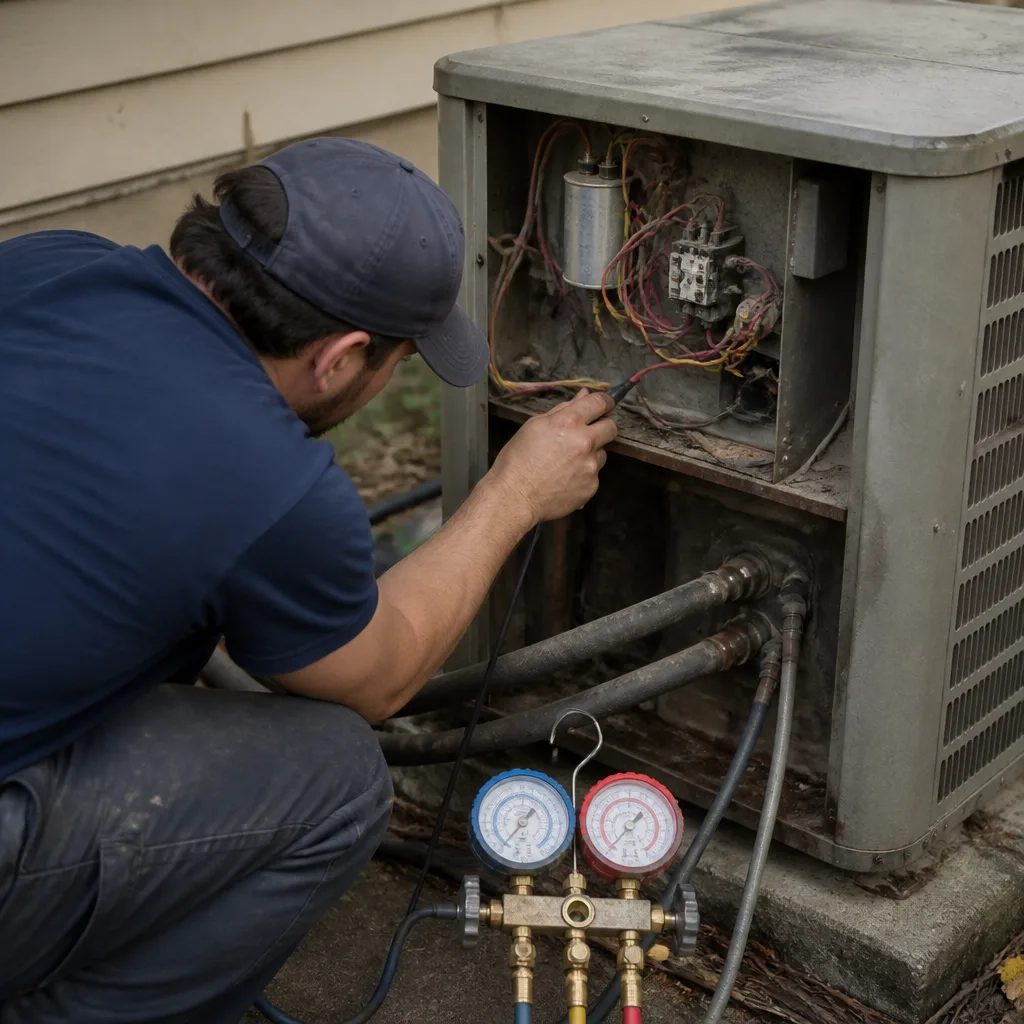 Before
 After
After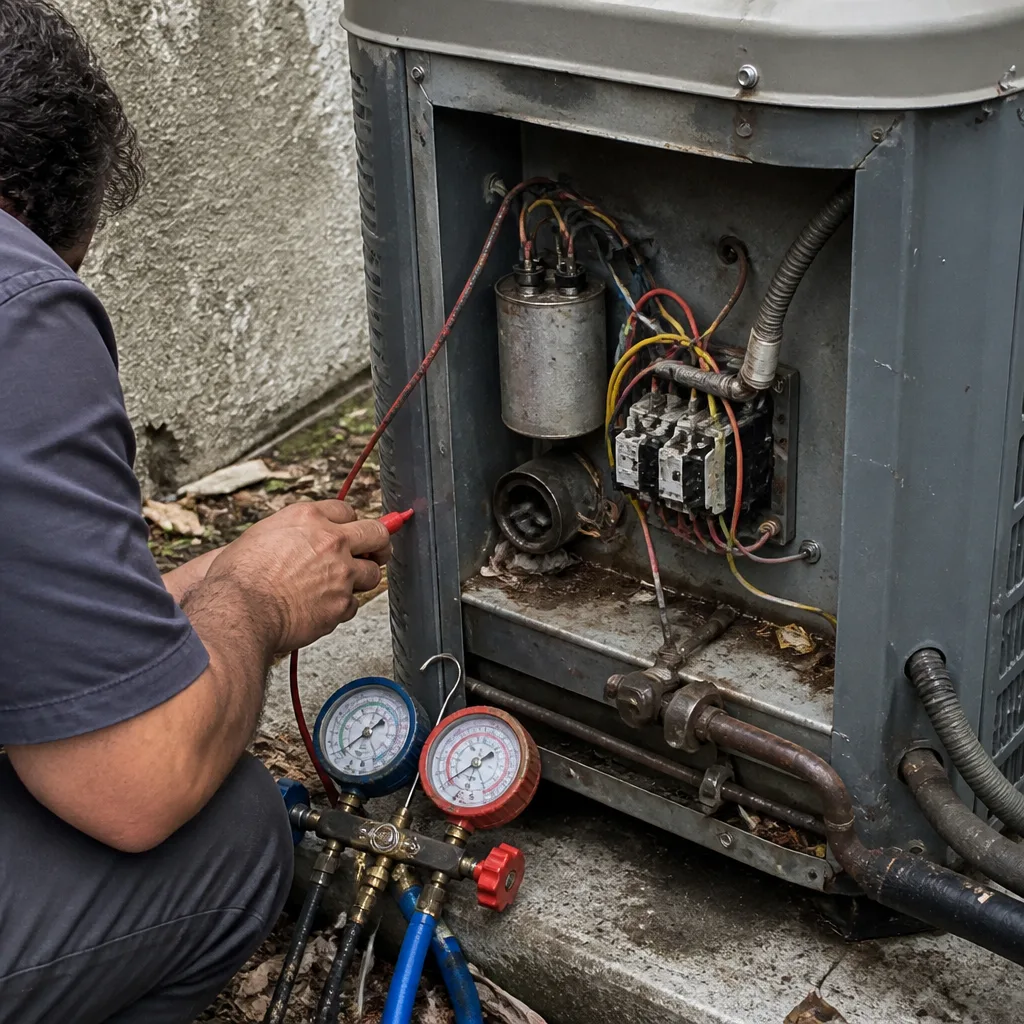 Before
 After
After