
 Furnace & heating
 AC repair
 Heat pumps
 Ductless mini splits
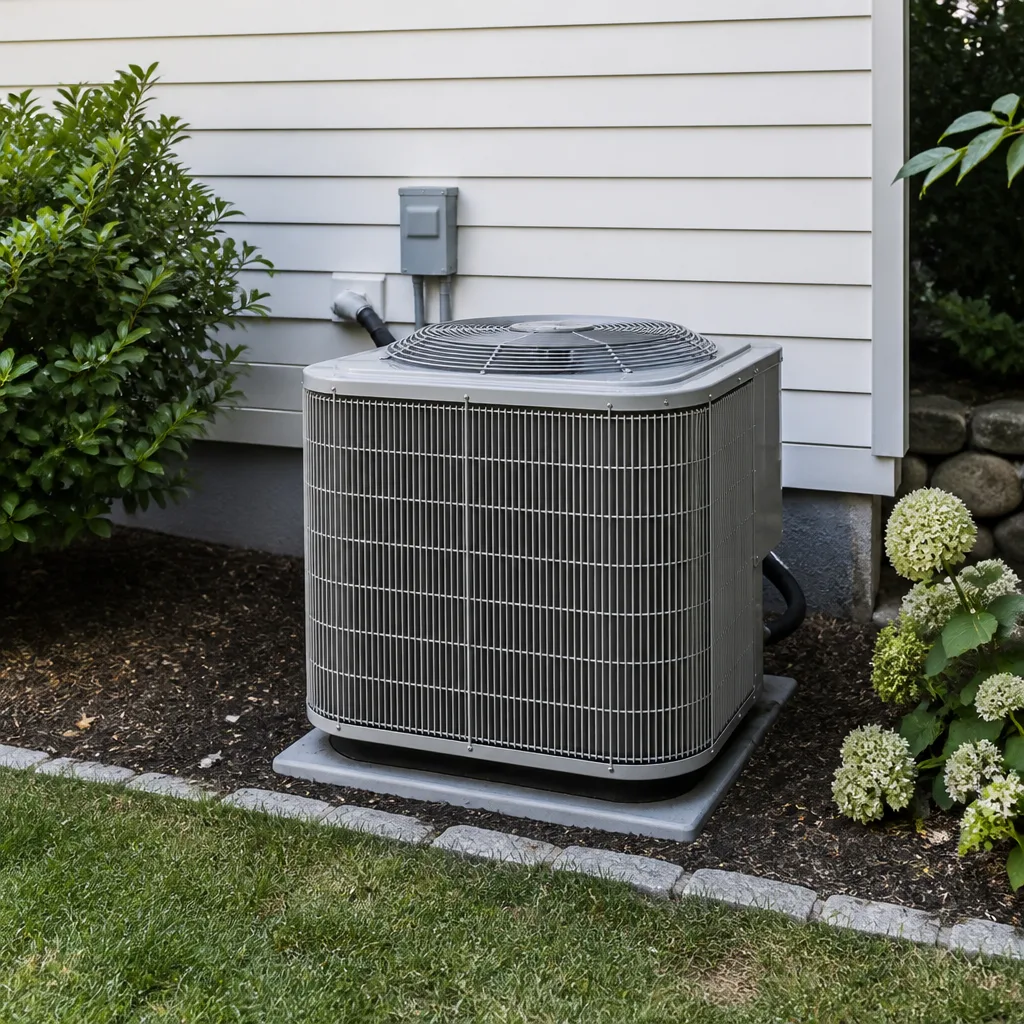 Carrier
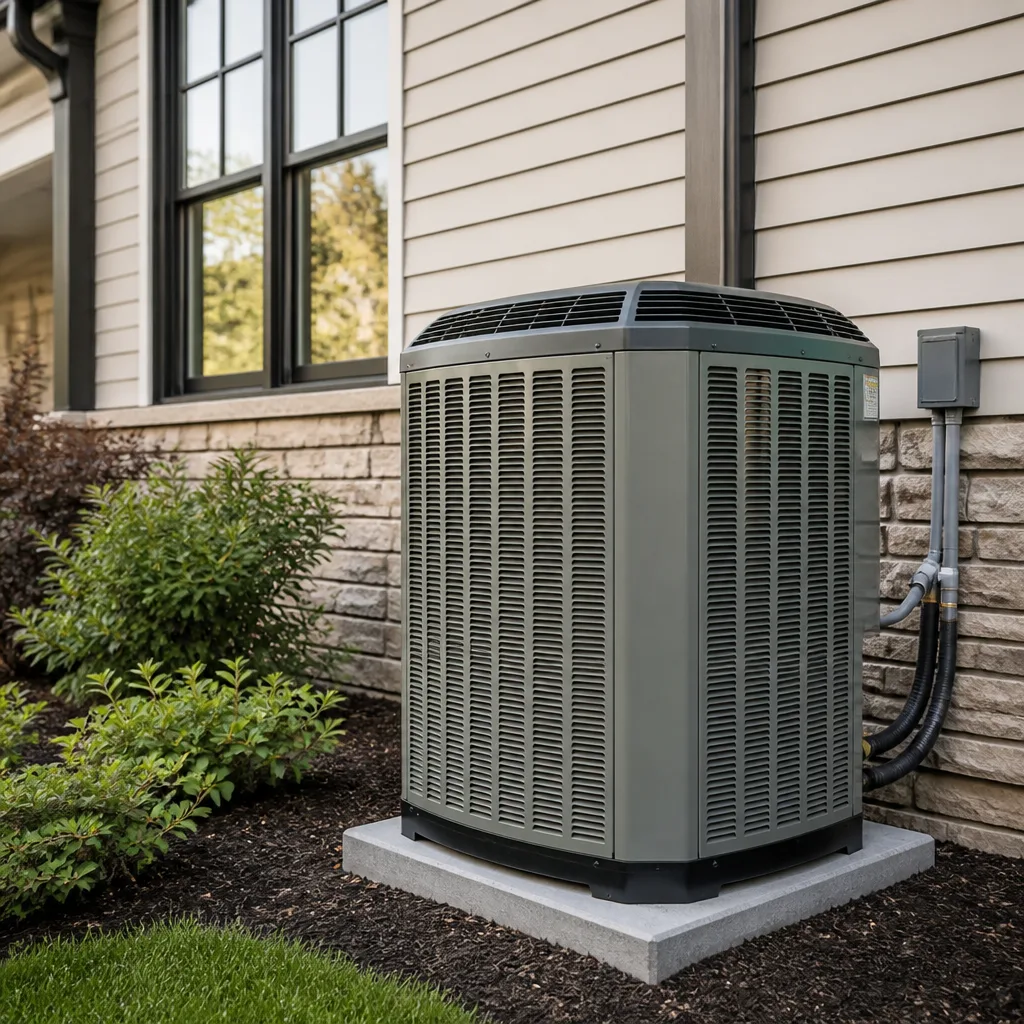 Trane
Trane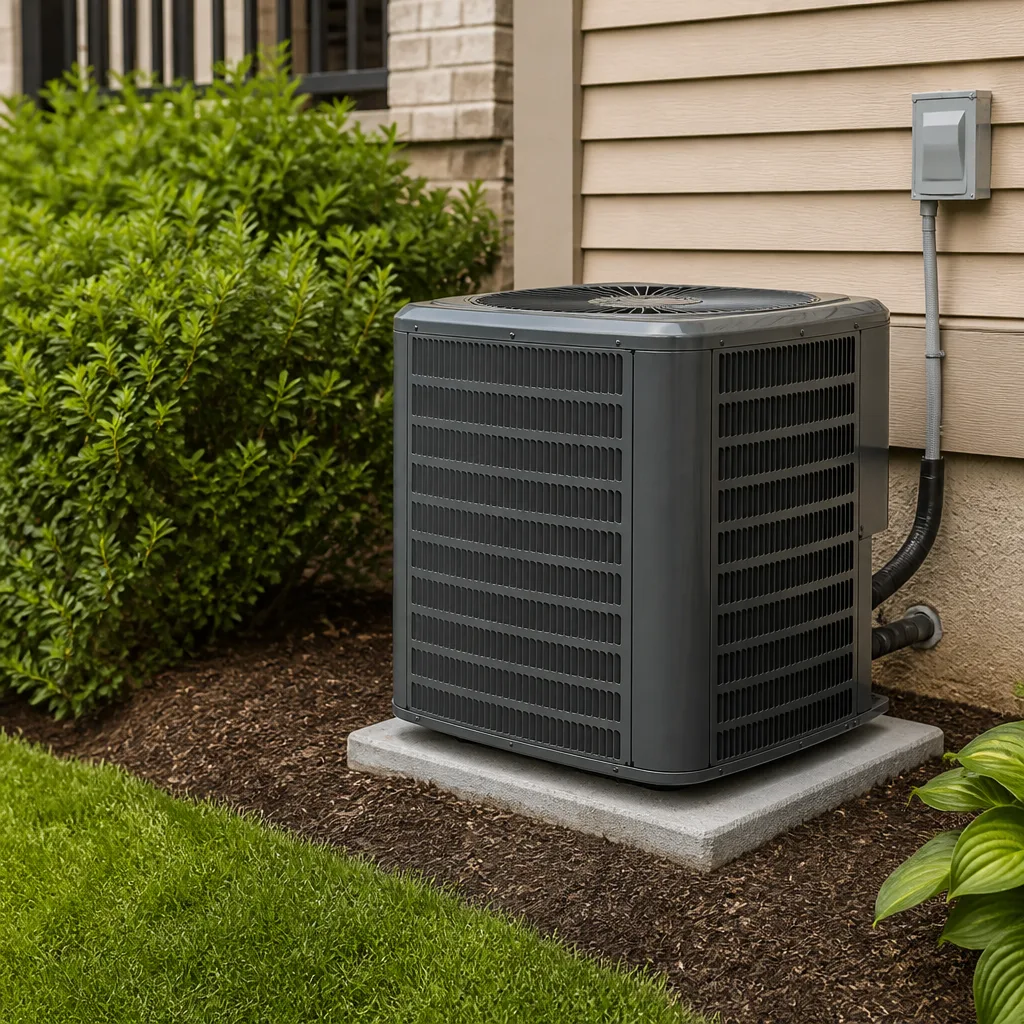 Goodman
Seasonal tune-up and full diagnostic on your Carrier, Trane, or Goodman system - readings shown to you before any repair is proposed
Diagnosis first, numbers second - you approve the repair price before a single part goes in.
Get your free estimateDaikin Capacitor Replacement: The Tampa Owner’s Guide
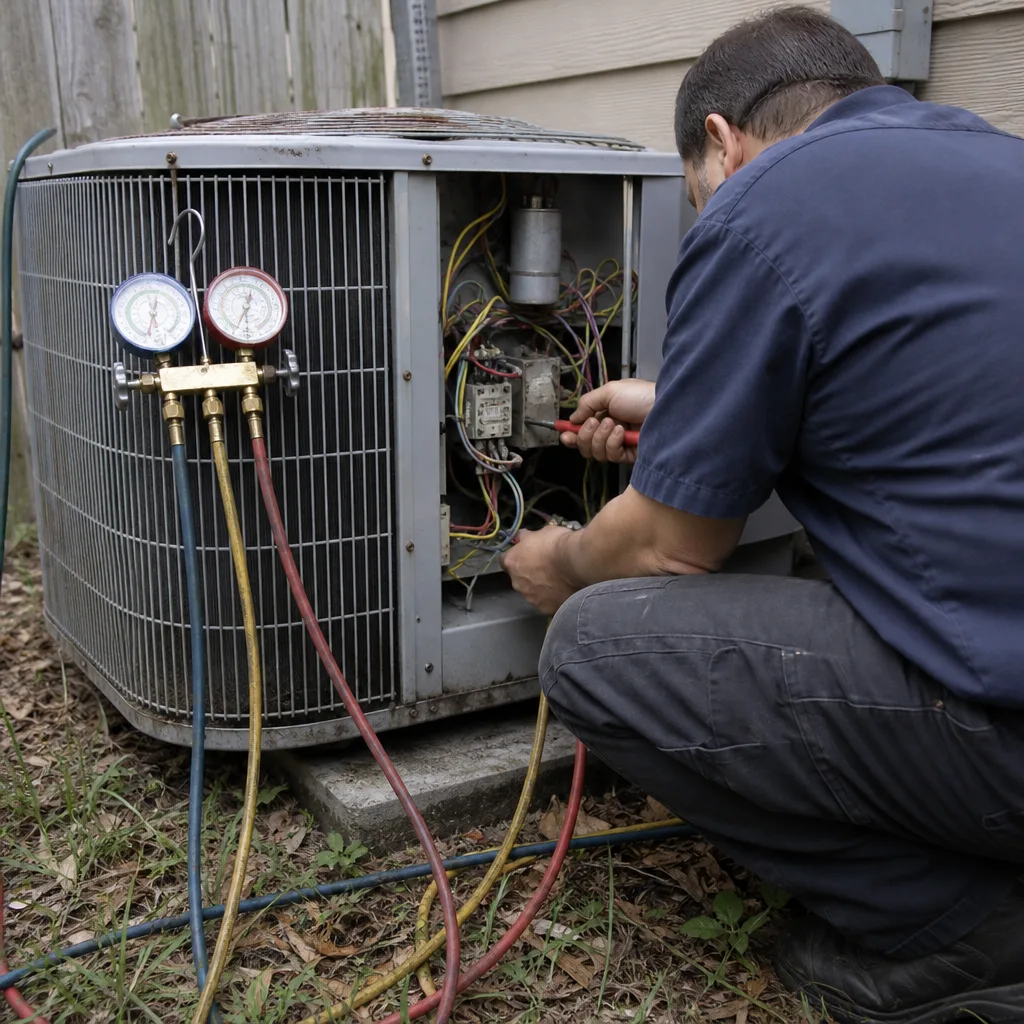
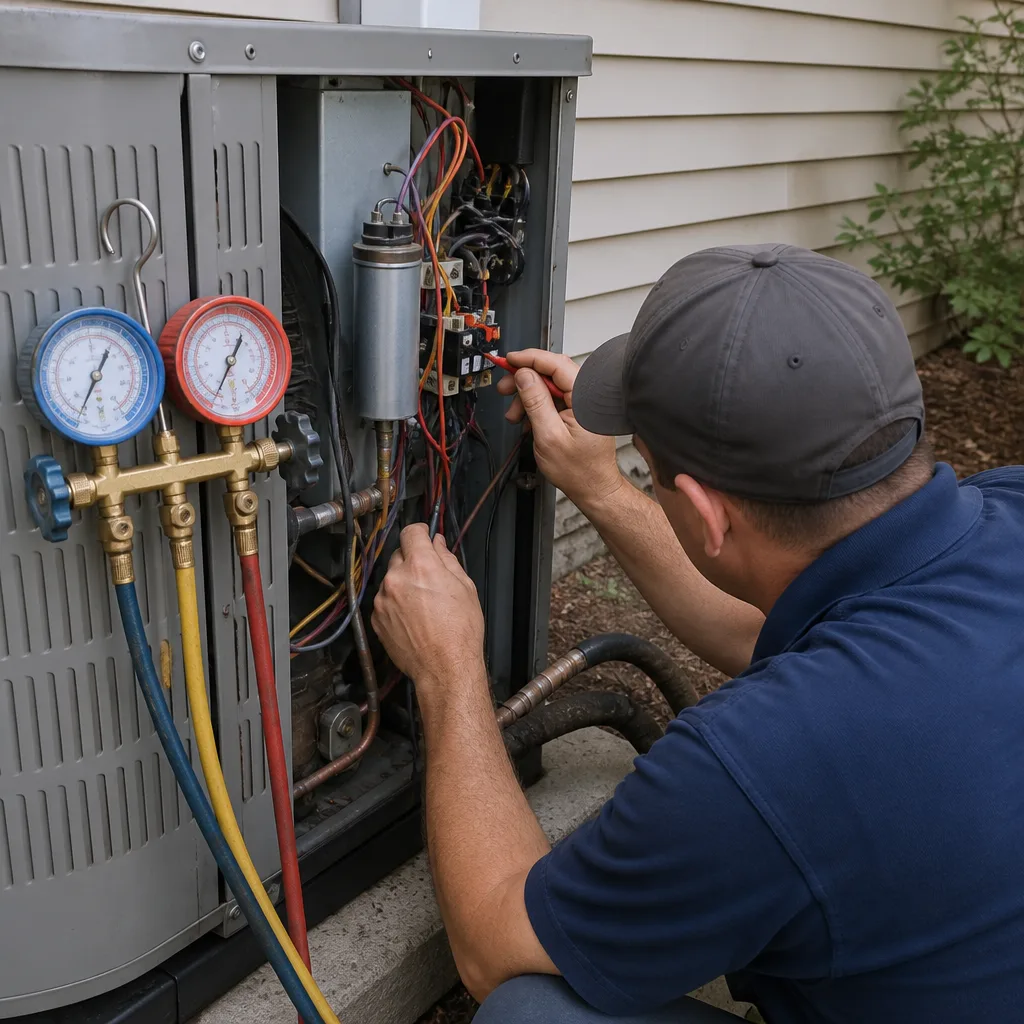
Daikin capacitor replacement in Tampa typically runs $150 to $350 installed, and we stock compatible capacitors on our trucks for same-day service in most cases. A capacitor is a small cylinder inside your outdoor condenser unit that stores and releases the electrical jolt needed to start the compressor and fan motor. When it fails, you’ll usually notice it first as a humming sound from the outdoor unit, a fan that won’t spin, or an AC that blows warm air on a 92-degree Tampa afternoon. Our techs carry OEM Daikin capacitors plus quality aftermarket equivalents, so the swap usually happens in one visit.
Most Tampa homeowners discover the problem when the outdoor unit hums but won’t kick on, or when the compressor short-cycles (starts, stops, starts again). In Florida’s humidity and heat, capacitors age faster than the national average. We see them fail most often in July and August, when systems run 14-plus hours a day. The good news: it’s one of the least expensive AC repairs, and we diagnose it in under 30 minutes with a meter reading.
Which Daikin Models This Applies To
This covers Daikin’s residential split systems and package units, including the DZ (heat pump), DX (straight cool), and DB/DC series condensers, along with the popular VRV and mini-split lines. Daikin uses two capacitor types depending on the model: dual-run capacitors (one cylinder handling both compressor and fan) and single-run capacitors (separate units for each motor). The dual-run style is far more common in Tampa’s existing Daikin installs, especially in homes built between 2005 and 2018 when builders put Daikin in a lot of South Tampa and Westchase developments.
Here’s the compatibility gotcha we see weekly: Daikin labels capacitors by microfarad rating (µF) and voltage, not by a universal part number. A 45/5 µF 440V dual-run capacitor from a Daikin DZ18TC won’t necessarily match a 40/5 µF from a DX16SA, even though both look identical from the outside. You have to read the stamped rating on the side of the old cylinder, or pull the model number from the condenser’s data plate. Getting this wrong means the compressor either won’t start or runs hot and trips the breaker. We match by spec, not by guess.
On the OEM versus aftermarket question: Daikin-branded capacitors are solid but often backordered through supply chains that don’t prioritize Tampa. Quality aftermarket options from AmRad and Titan HD are U.S.-made, match or exceed OEM specs, and carry five-year warranties versus two on most OEM parts. We install both and put the choice in writing before the work starts, so you know which one you’re paying for and why.
Styles & brands we work with
Signs Your Daikin Capacitor Replacement Is Failing
- Outdoor unit hums but the fan won’t spin. The capacitor can’t deliver the starting jolt, so the fan motor just sits there vibrating. If you catch it early, you may be able to give the fan a nudge with a stick and it’ll spin on its own in some cases, but the part still needs replacing.
- AC blows warm or lukewarm air. When the compressor capacitor fails, the compressor never starts, so there’s no cooling happening. The indoor blower keeps running, which is why you feel air movement but no temperature change.
- Short-cycling. The compressor starts, cuts off after a few minutes, then starts again. This is a classic weak-capacitor symptom in Tampa’s summer, as the part can’t hold enough charge to keep the compressor running through a full cycle.
- The system trips a breaker more than once. A failing capacitor draws inconsistent amperage, and that irregular draw can pop the breaker. One trip might be a fluke; two in a month means an electrical issue that needs a real diagnosis.
- The outdoor unit is noticeably louder than before. A struggling capacitor makes the compressor work harder at startup, which translates to a louder, rougher sound from the condenser. Andre Fuller has walked onto plenty of Tampa service calls where the first clue was the homeowner saying, “it just sounds angry now.”
See the difference
 Before
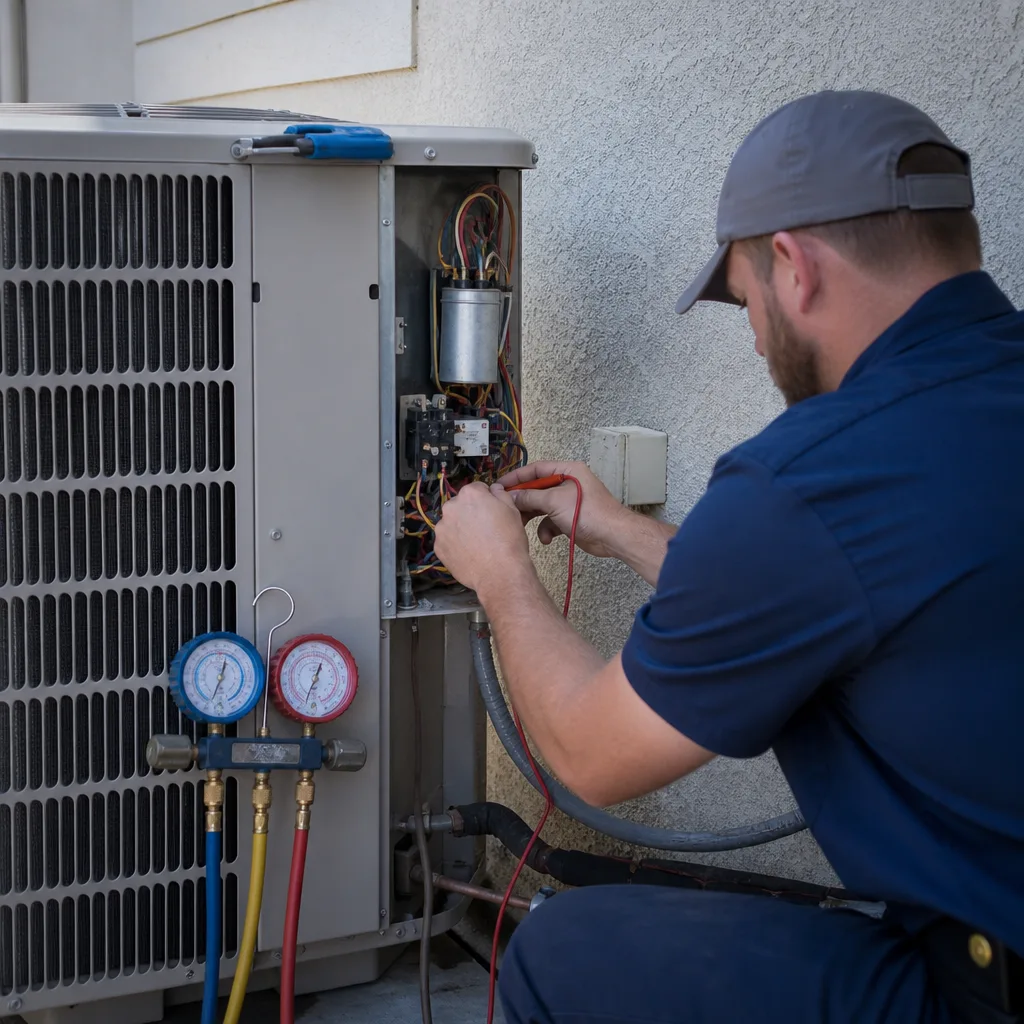 After
After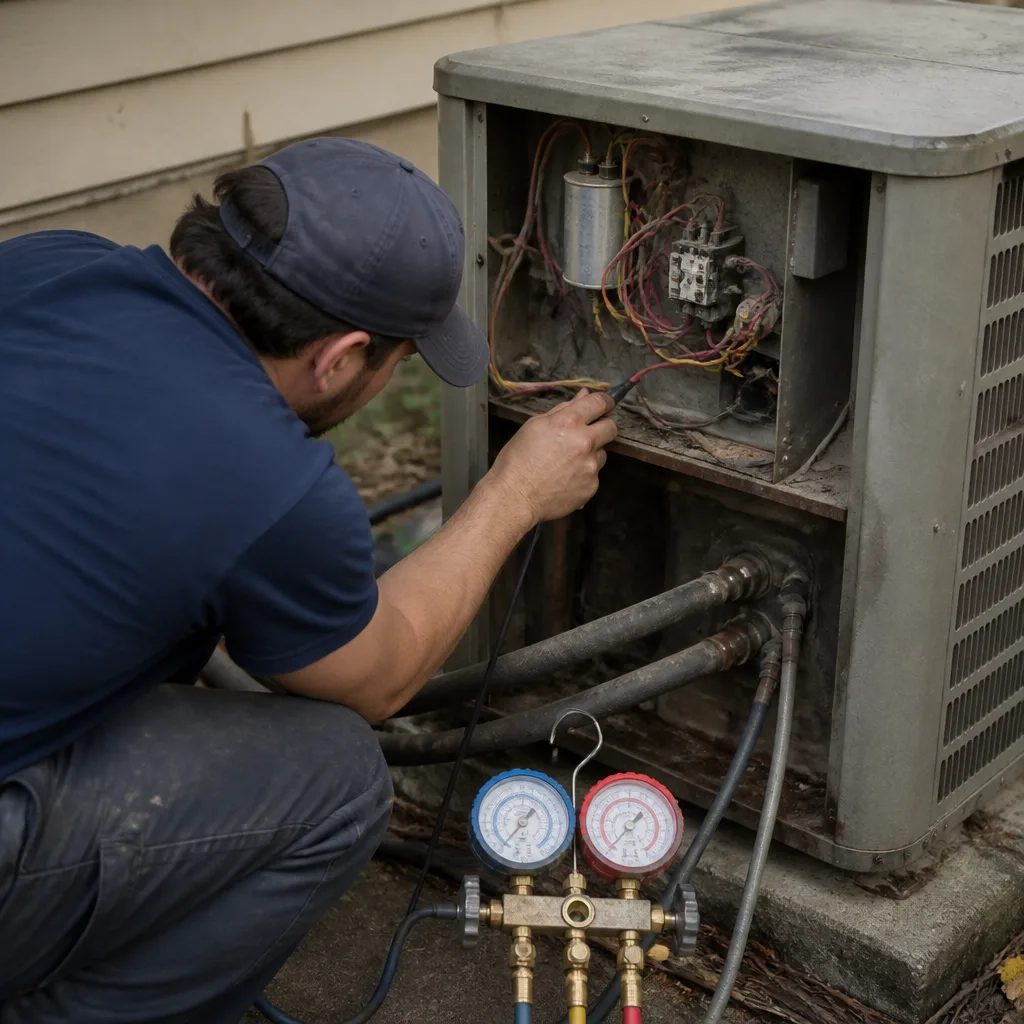 Before
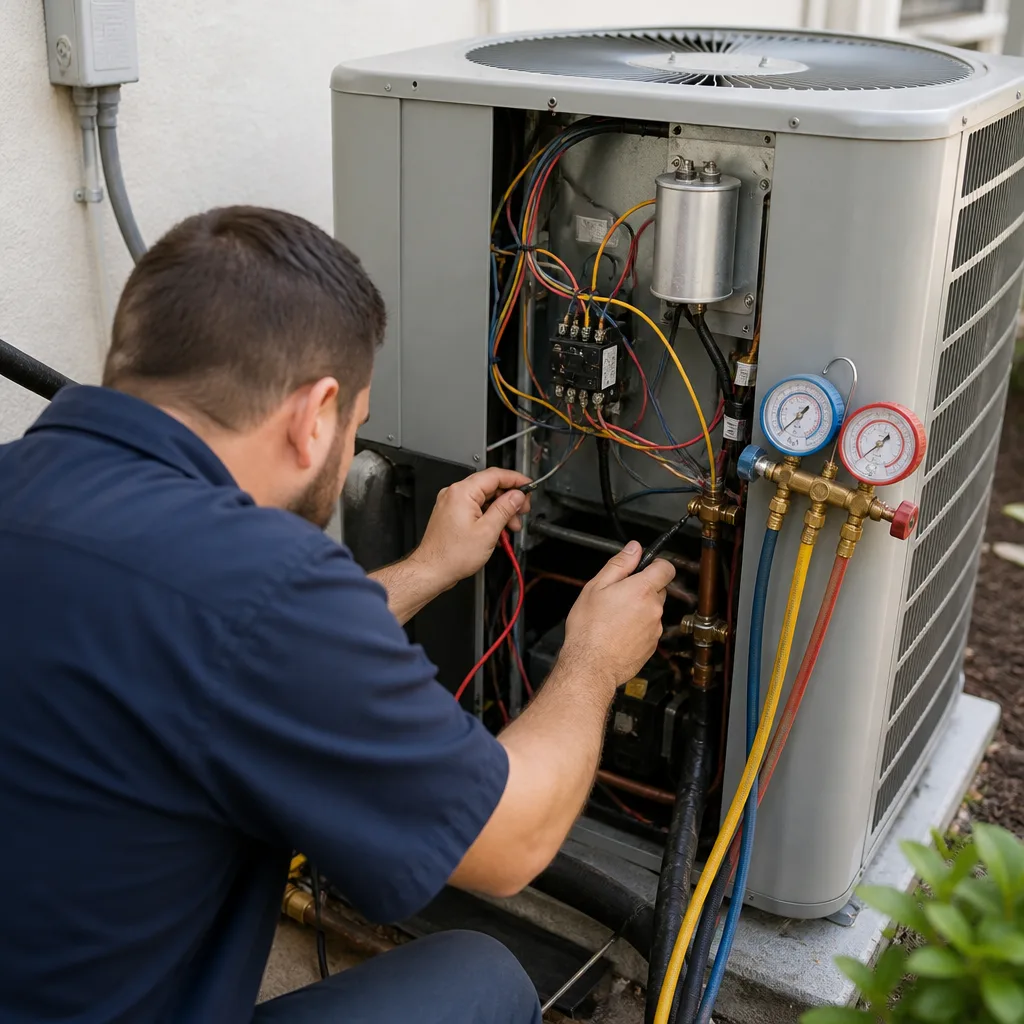 After
After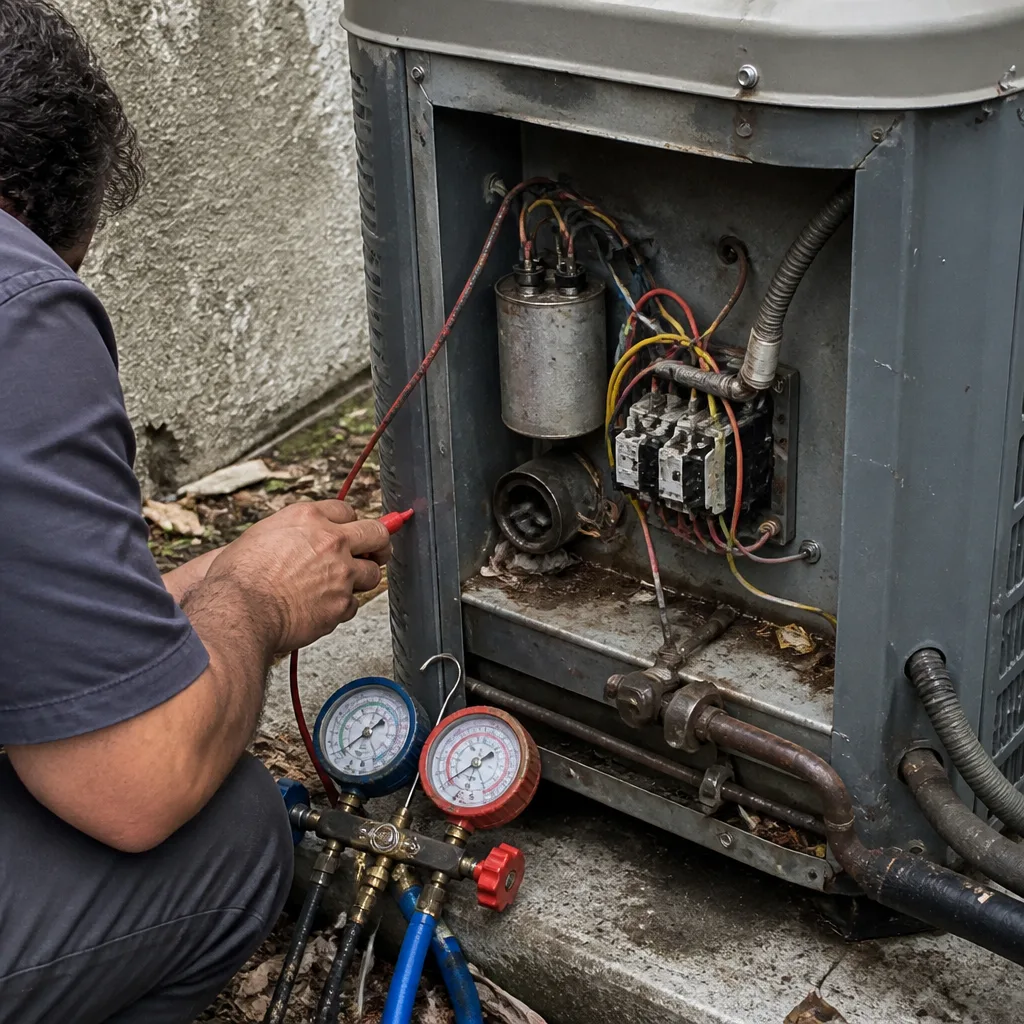 Before
 After
AfterReplacement Cost & What’s Included
In Tampa, a Daikin capacitor replacement runs $150 to $350 installed, depending on whether you have a single-run or dual-run capacitor, the µF rating, and whether we’re installing an OEM or premium aftermarket part. The part itself costs $40 to $120 at our cost; the rest is labor, the service call, and the diagnostic confirmation. Compare that to a full compressor replacement at $2,000-plus, and catching this early saves real money. Most AC repairs in our market run $150 to $650, so a capacitor sits on the affordable end of that range.
Every replacement includes the capacitor itself, a full system start-test to confirm the compressor and fan are pulling correct amperage, and a check of the contactor and wiring while we’re in there. You get a written price before we touch the unit, and the repair carries our 365-Day Done Right Promise. If the capacitor fails within that window, we come back at no charge. That guarantee is written, not verbal.
DIY or Call Us?
Capacitors hold an electrical charge even after the system is off, and discharging one wrong can cause a serious shock or burn. We don’t recommend replacing a capacitor yourself. What you can safely check: confirm the thermostat is set to cool and calling for cold air, verify the breaker is on, and check that the outdoor unit isn’t buried in leaves or debris. If the unit still hums or won’t start, that’s where you stop.
The problem with DIY capacitor replacement isn’t the part cost; it’s what happens if you wire it wrong or buy the wrong µF rating. A mismatched capacitor can destroy a compressor, and now you’re looking at a $2,000 repair instead of a $250 one. Call (850) 608-1463. We’ll have a tech at your door with the right part, a meter, and a written quote before any work starts.
FAQs
A Daikin capacitor typically lasts 5 to 10 years in Tampa’s climate, though we see failures as early as 3 years in systems that run constantly through humid, storm-heavy summers. Heat and voltage spikes shorten that lifespan, and Florida’s lightning season is a known capacitor killer. We check capacitor readings during every tune-up so you’re not surprised by a failure in August.
No. A capacitor is a sealed component, and once it swells, leaks, or drops below 10 percent of its rated microfarad capacity, replacement is the only fix. We test every capacitor with a meter before recommending replacement, so you’re never paying for a part that doesn’t need changing.
The actual swap takes 30 to 45 minutes once the tech confirms the diagnosis. Adding in the full system check and the written quote you review before work starts, expect the visit to run 60 to 90 minutes total. Same-day availability is common for capacitor calls in Tampa, especially if you book before 2 p.m.
Yes. Our trucks carry the most common Daikin dual-run and single-run capacitor ratings, including 35/5, 40/5, 45/5, and 50/5 µF at 370V and 440V. If your unit needs an unusual spec, we can typically source it same-day from local supply houses in the Tampa area. We also carry parts for Carrier, Trane, and Lennox systems.
A failed capacitor rarely justifies replacing the whole system on its own. If the system is under 12 years old and the compressor still pulls normal amperage on the new capacitor, repair is the right call. If the system is past 15 years and you’re stacking multiple repairs per season, that’s a different conversation. We’ll tell you straight which side you’re on; call (850) 608-1463 for an honest read and a free estimate.
Written by Andre Fuller, Owner, Halden Heating and Air Tampa at Halden Heating and Air Tampa, serving Tampa and nearby areas.